Guides
Contact
Start free
Articles
Tools
AI resume tools are everywhere, but do recruiters actually accept them? Here's what the data says, and where AI helps vs hurts your chances.
Read more
Strategy
Applying to jobs manually is a full-time job in itself. Here's the system that lets you submit 100 quality applications a week without losing your mind.
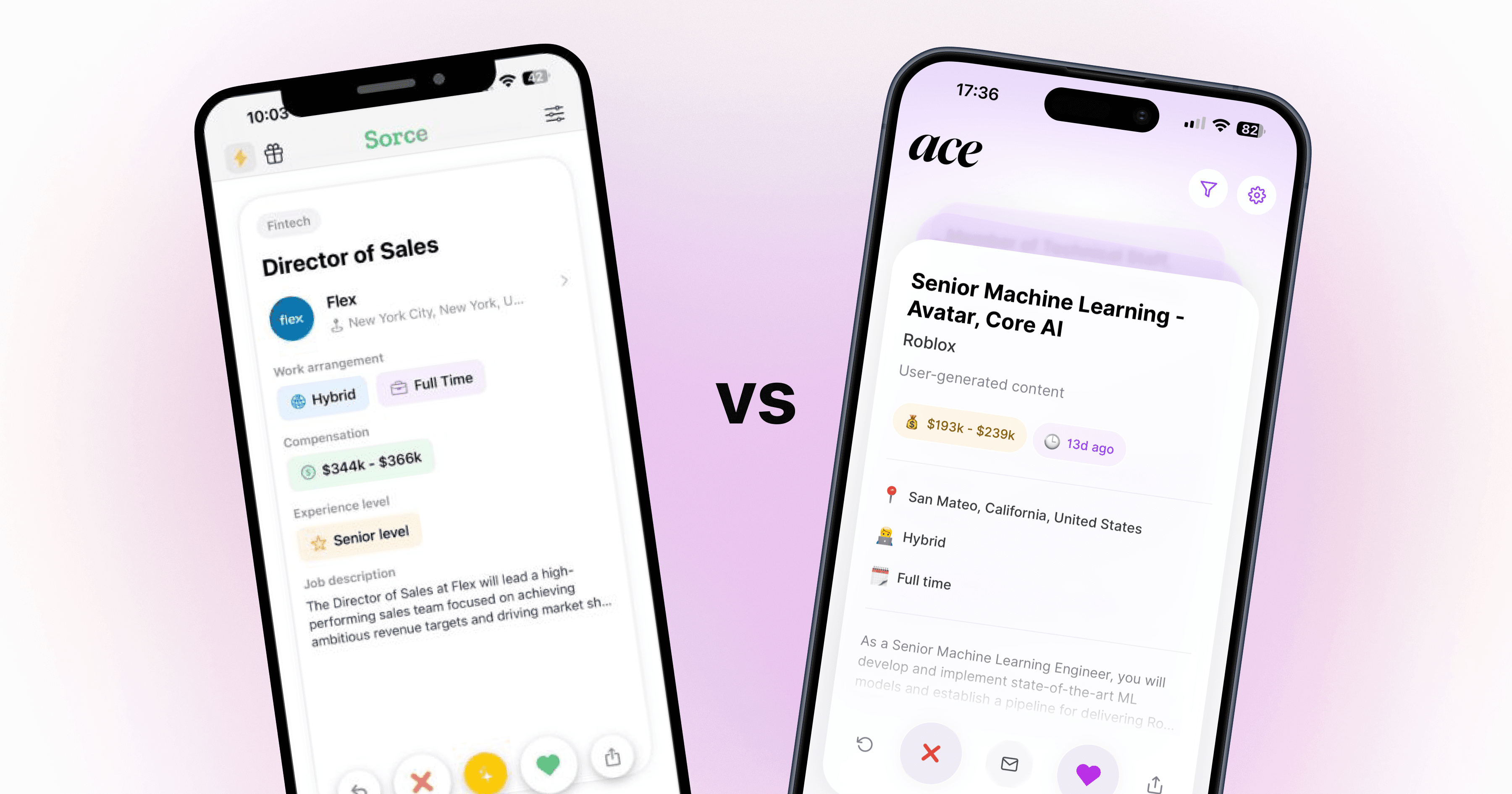
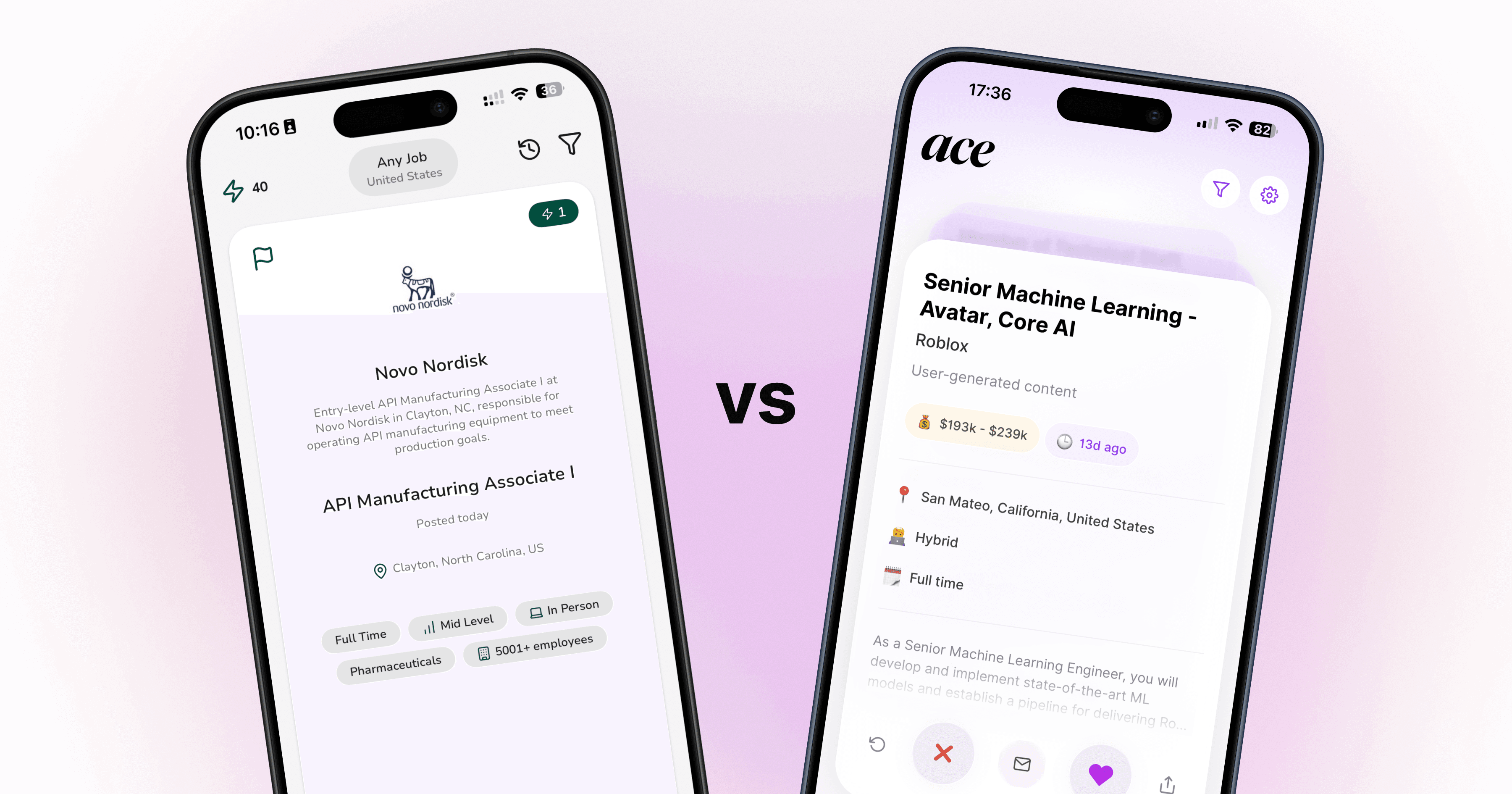
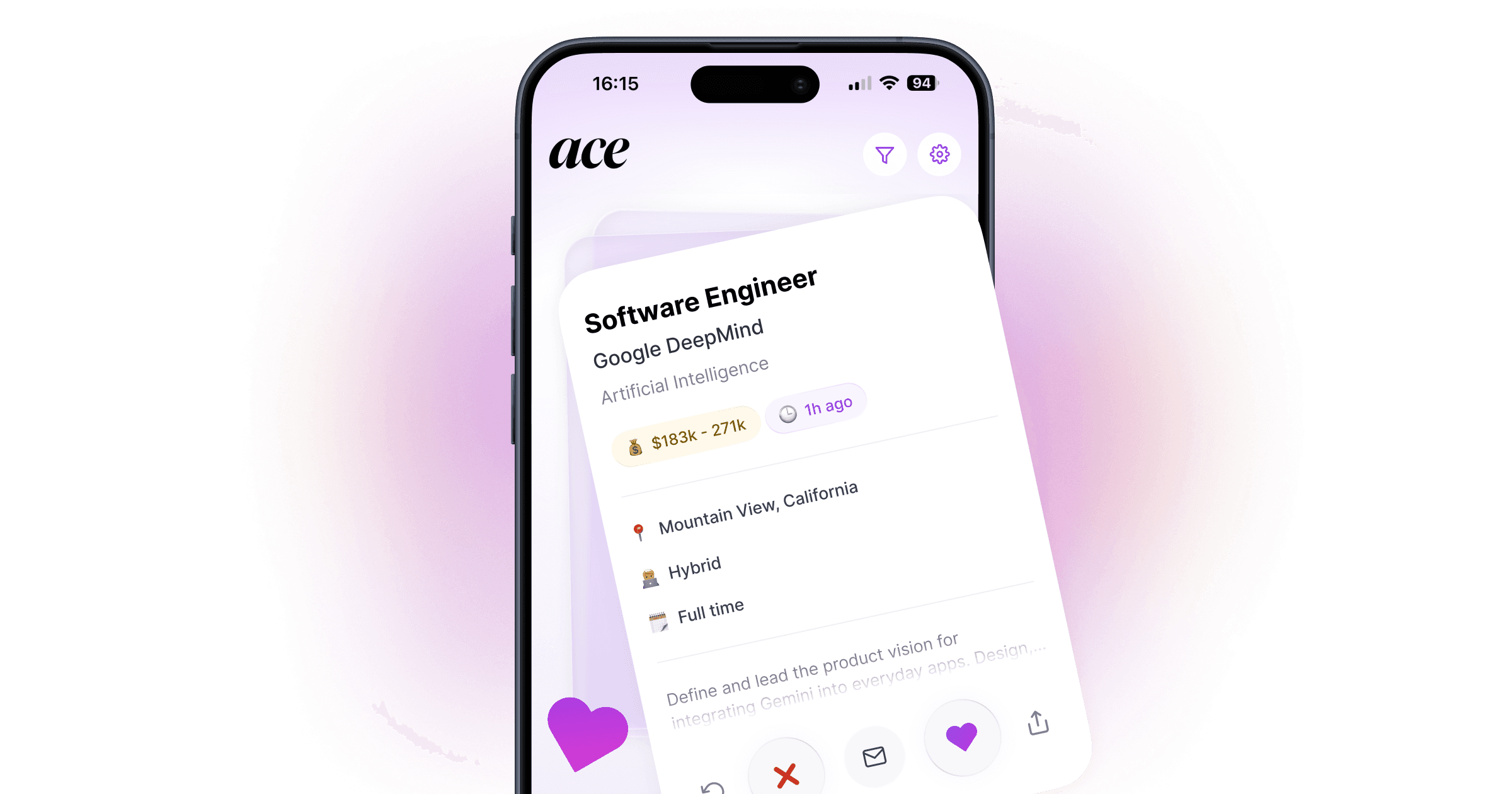
Sorce and Ace both use a swipe-to-apply model. But their approach to resumes, job matching, and reliability are very different.
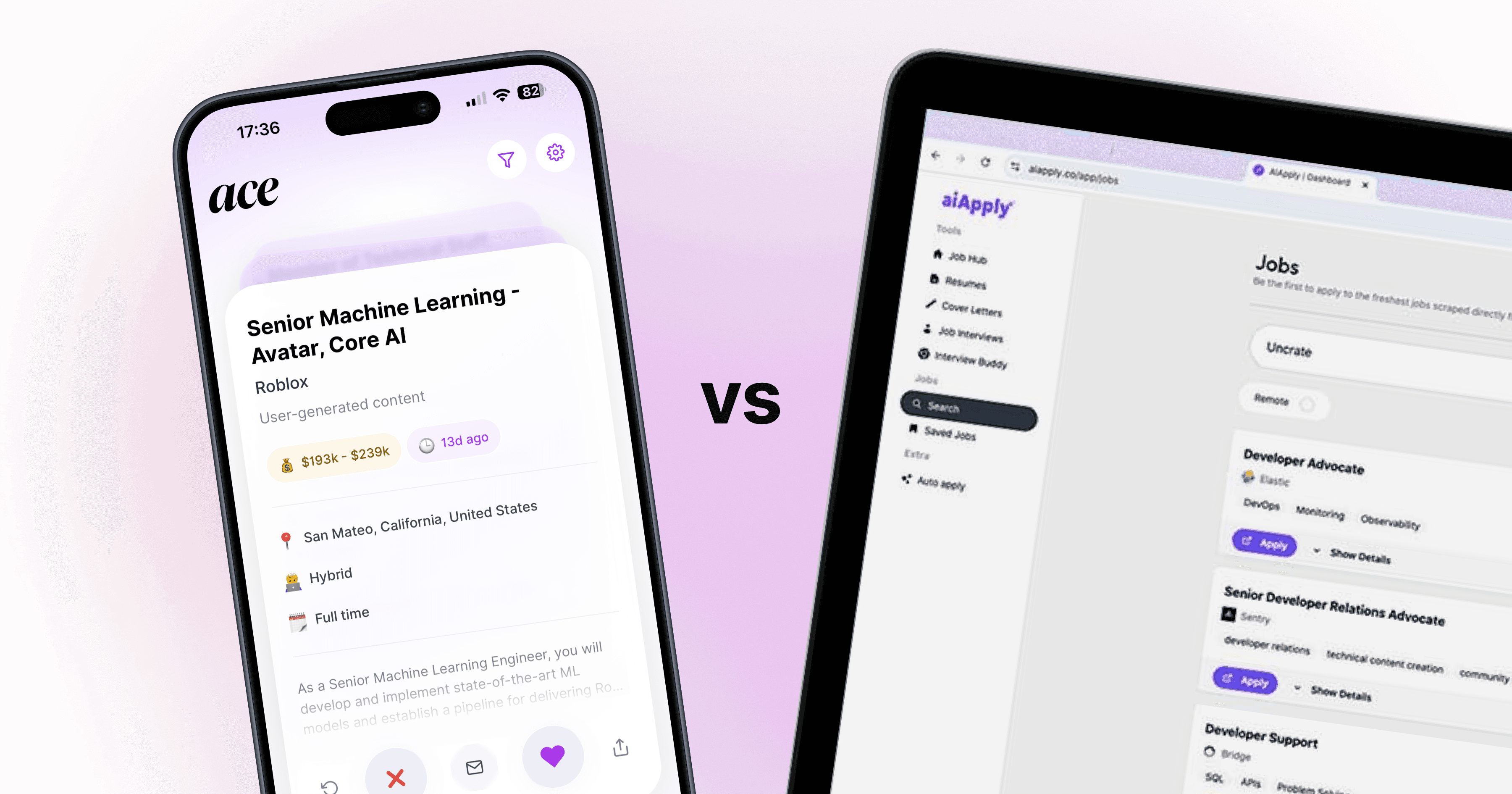
AIApply and Ace both use AI to speed up job applications. But one was built around resume creation, and the other around full automation. Here's how they compare.
Resume
Most resumes get rejected in under 10 seconds. Here are the 10 most common mistakes and exactly how to fix each one.
75% of resumes get filtered out by ATS software before a human ever sees them. Here's how to make sure yours gets through.
Both apps let you swipe to apply for jobs. But they handle resumes, auto-apply, and job matching very differently. Here's how they compare.
We tested 8 AI job search tools to see which ones actually help you land interviews. Here's what worked, what flopped, and what's worth your money.
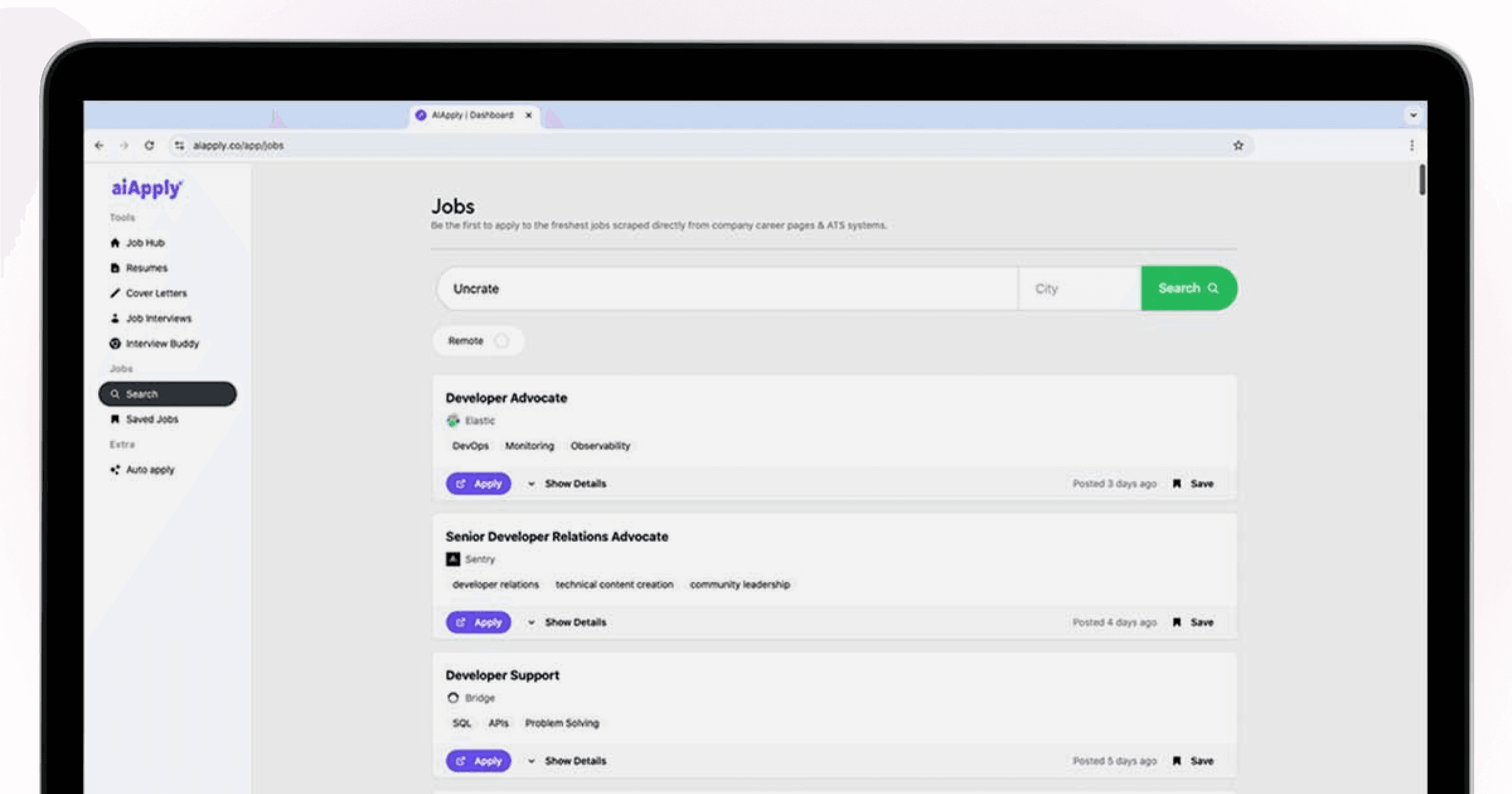
AIApply claims to automate your job search with AI. We break down what it actually does, where it falls short, and whether it's worth the price.
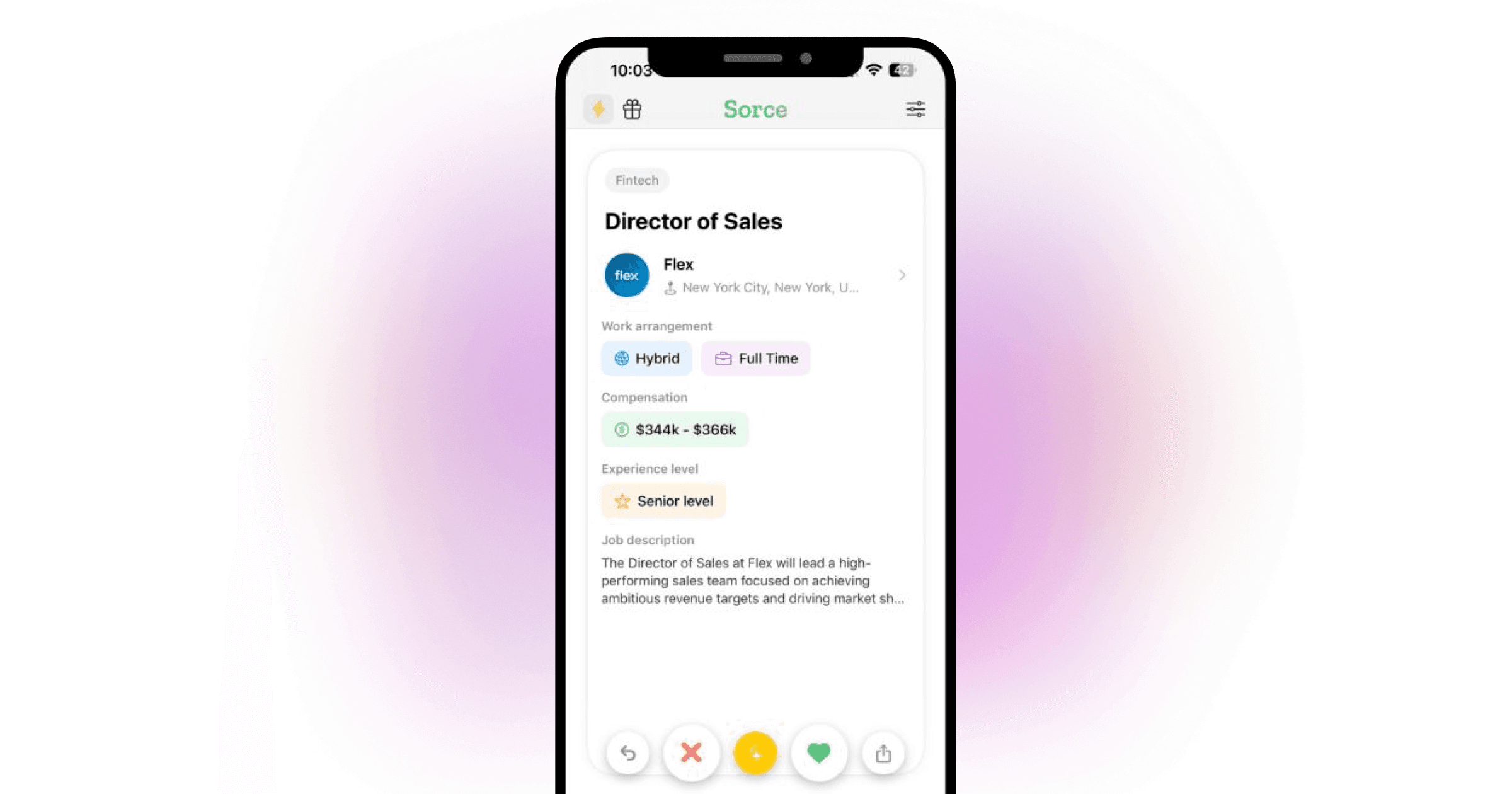
Sorce promises to apply for jobs automatically while you swipe. We look at what it delivers, what the reviews say, and whether it's worth paying for.
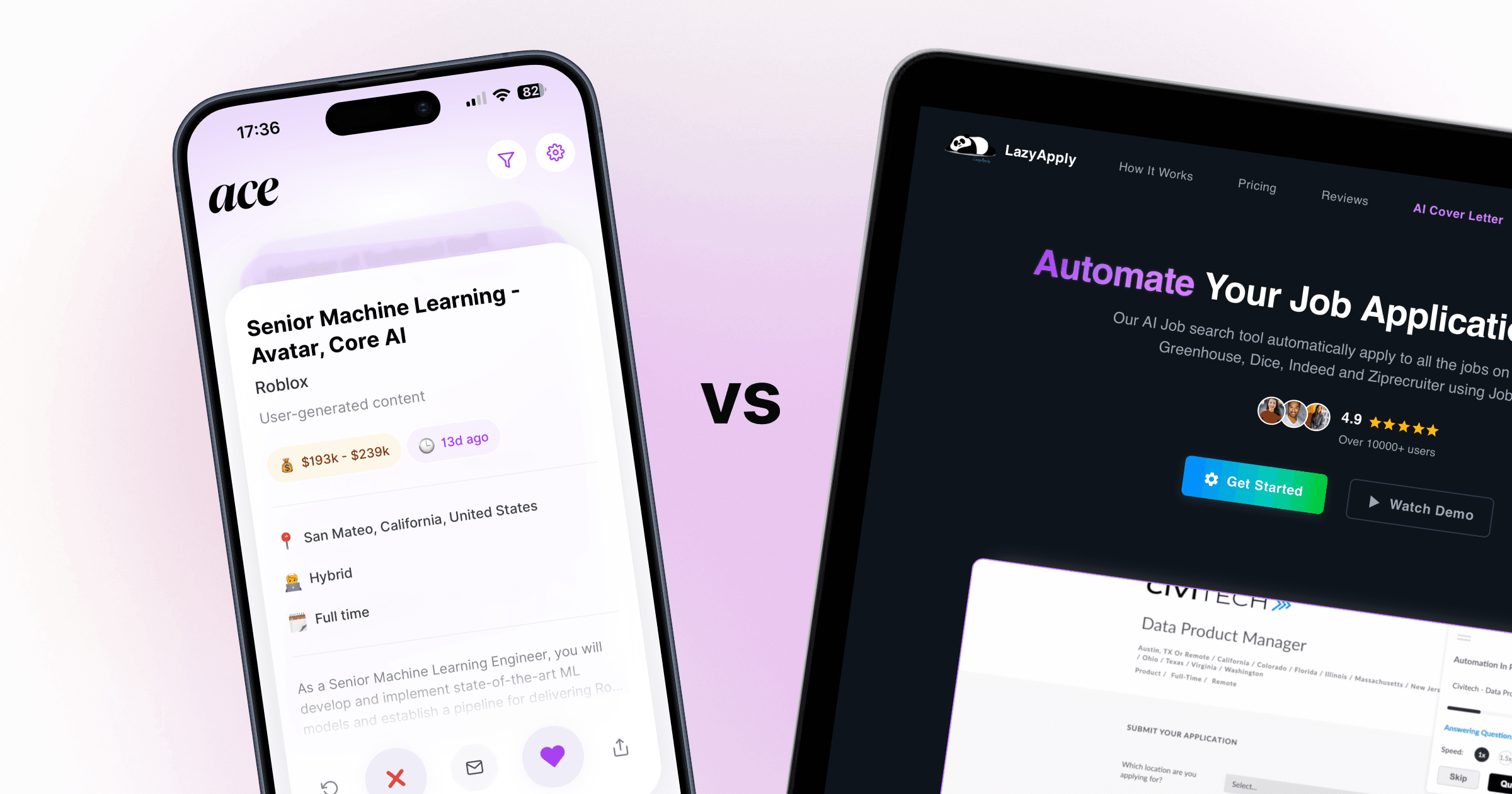
LazyApply fires off hundreds of applications automatically. Ace sends fewer, but each one is tailored. Here's which approach actually gets you interviews.
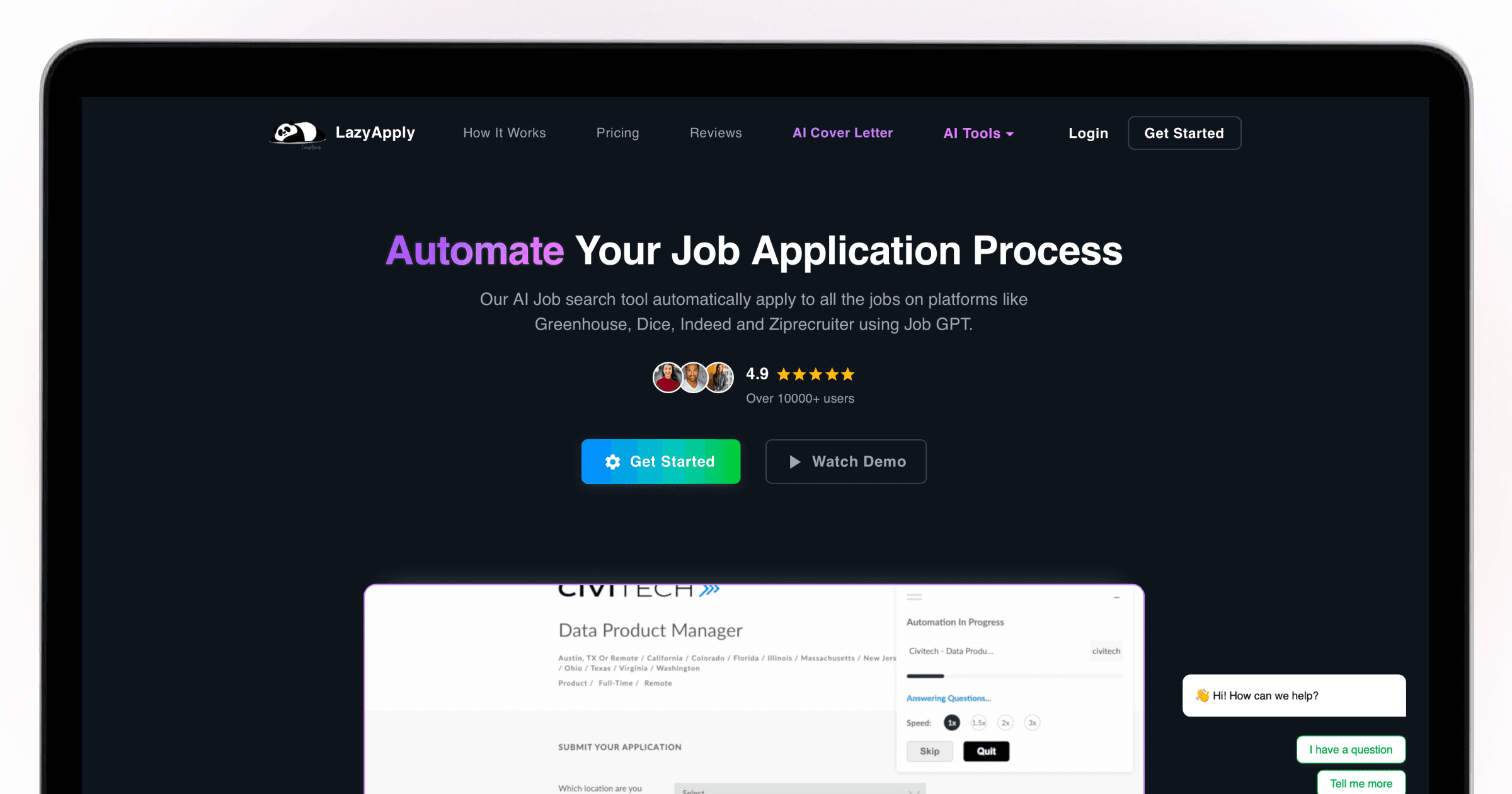
LazyApply promises to apply to hundreds of jobs automatically. Here's what it actually delivers, what it costs, and whether the response rates justify it.
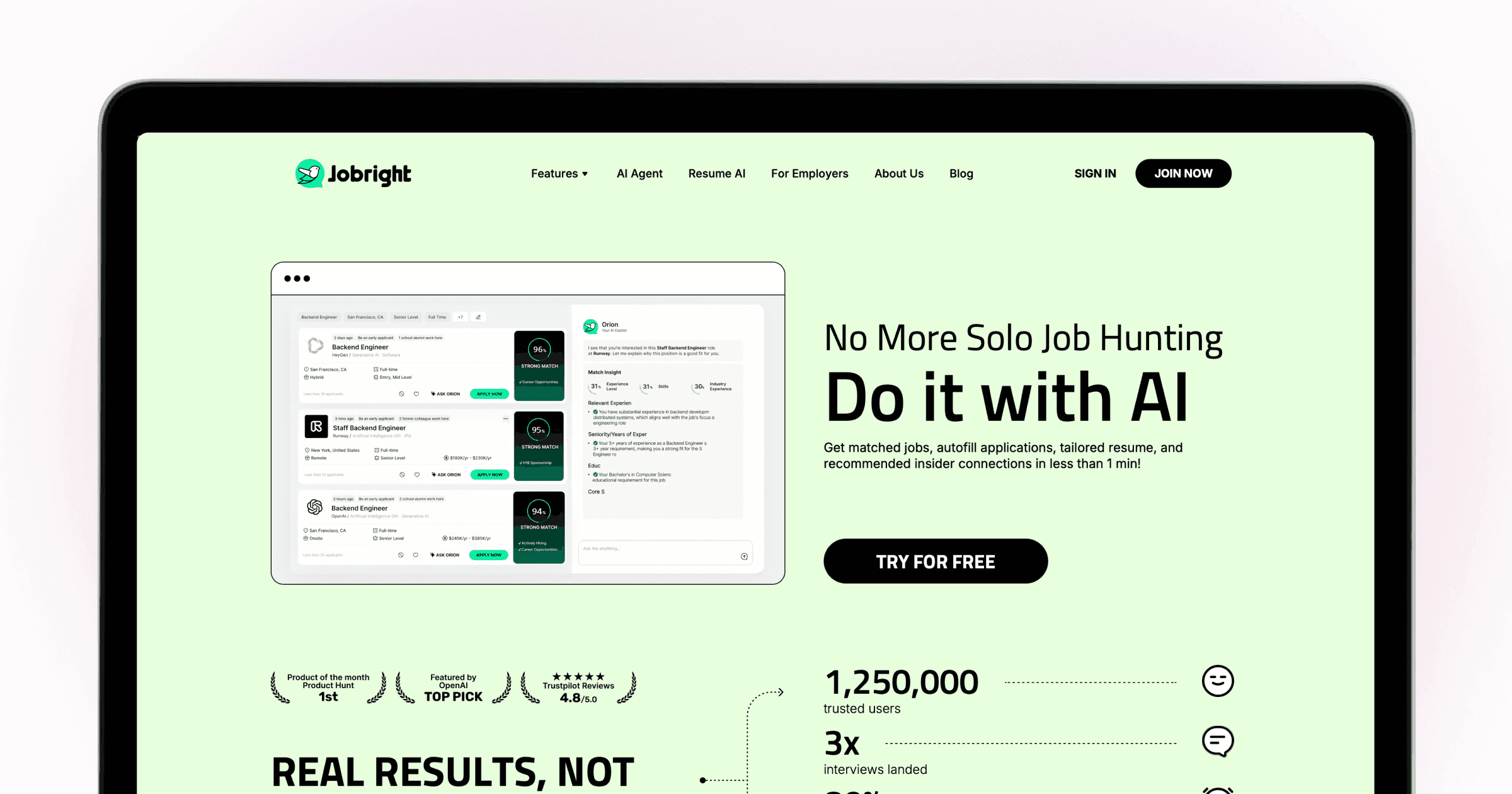
Jobright uses AI to match you to jobs and track your applications. Here's what it actually does, how it compares, and whether it's worth your time.
A generic resume gets filtered out by ATS before a human sees it. Here's how to tailor for each role quickly — and how to automate it entirely.
If you're applying and hearing nothing back, one of five things is going wrong. Here's how to diagnose which one and fix it fast.
Most cover letters make the same five mistakes. Here's what they are, why they kill your application, and exactly how to fix each one.
Hiring
Recruiters spend around 7 seconds on a CV before deciding whether to keep reading. Here's exactly what they're looking for in those seconds.
Templates
Most cover letters are skipped or skimmed. Here's the structure and language that makes recruiters stop and read yours properly.
Interview
You've got an interview tomorrow. Here's the preparation that actually makes a difference when time is short — and what you can skip.
LinkedIn
Most LinkedIn profiles are invisible to recruiters. Here's exactly what to change to start showing up in searches and getting approached for the right roles.
Interviewers ask the same questions more often than you think. Here's what they're really looking for — and how to answer each one well.
This question opens almost every interview and most people answer it badly. Here's the structure that works — and how to make it sound natural.
This question trips up more candidates than any other. Here's what interviewers are actually looking for — and how to answer it honestly without hurting yourself.
Most candidates do nothing after an interview. Here's the follow-up strategy that keeps you visible, shows professionalism, and occasionally changes outcomes.
Getting an interview request is exciting. Replying to it well is easy — here's exactly what to write, with templates for every situation.
The right follow-up email after an interview is brief, specific, and shows professionalism. Here are the templates — and the timing — that actually work.
Most application emails get ignored before they're read. Here's what to write in the subject line and opening — and the templates that work.
Waiting to hear back is the worst part of job searching. Here's when and how to follow up in a way that's professional — not desperate.
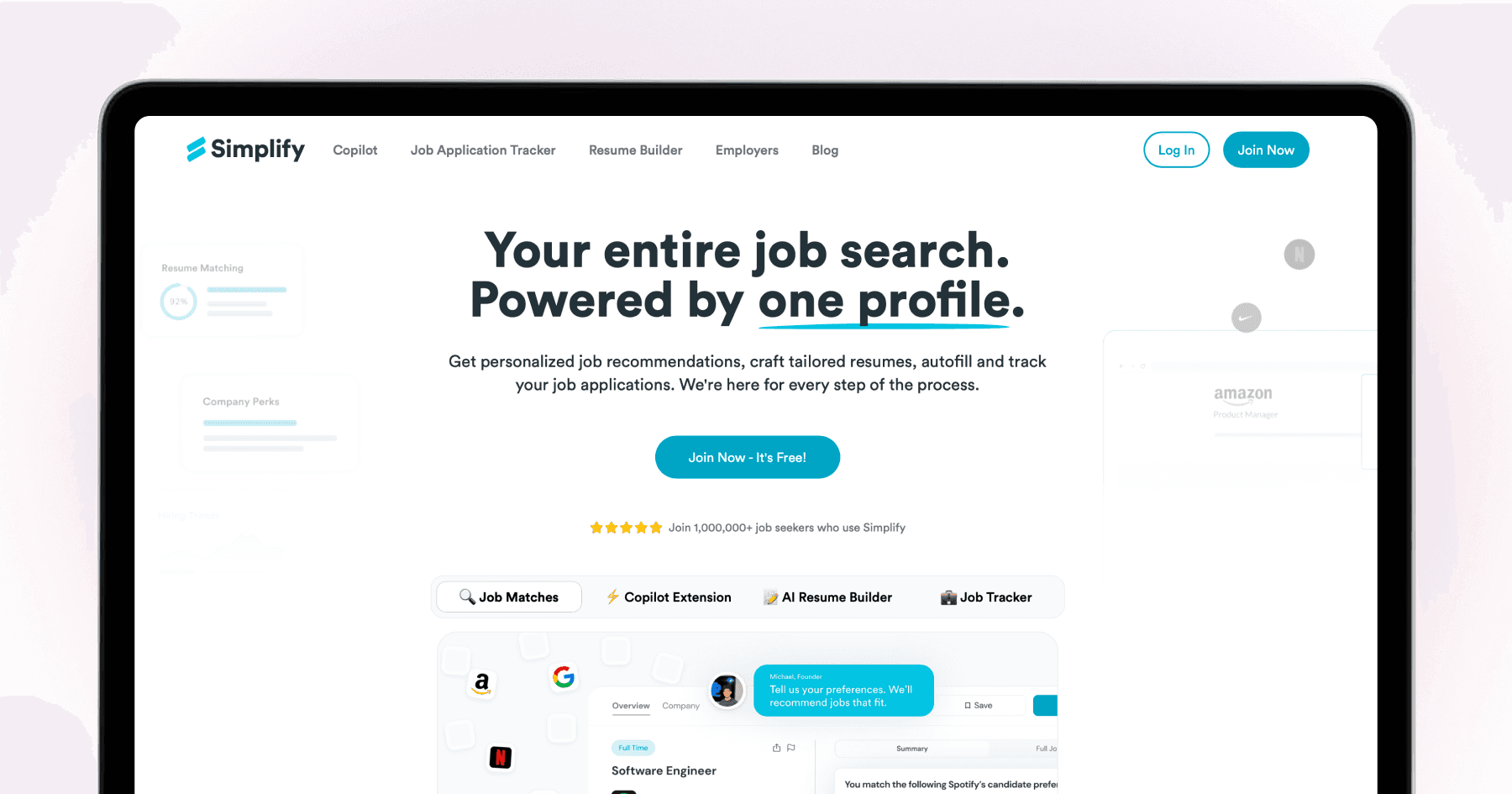
Simplify promises to autofill job applications and track your search in one place. Here's what it actually delivers — and where it falls short.
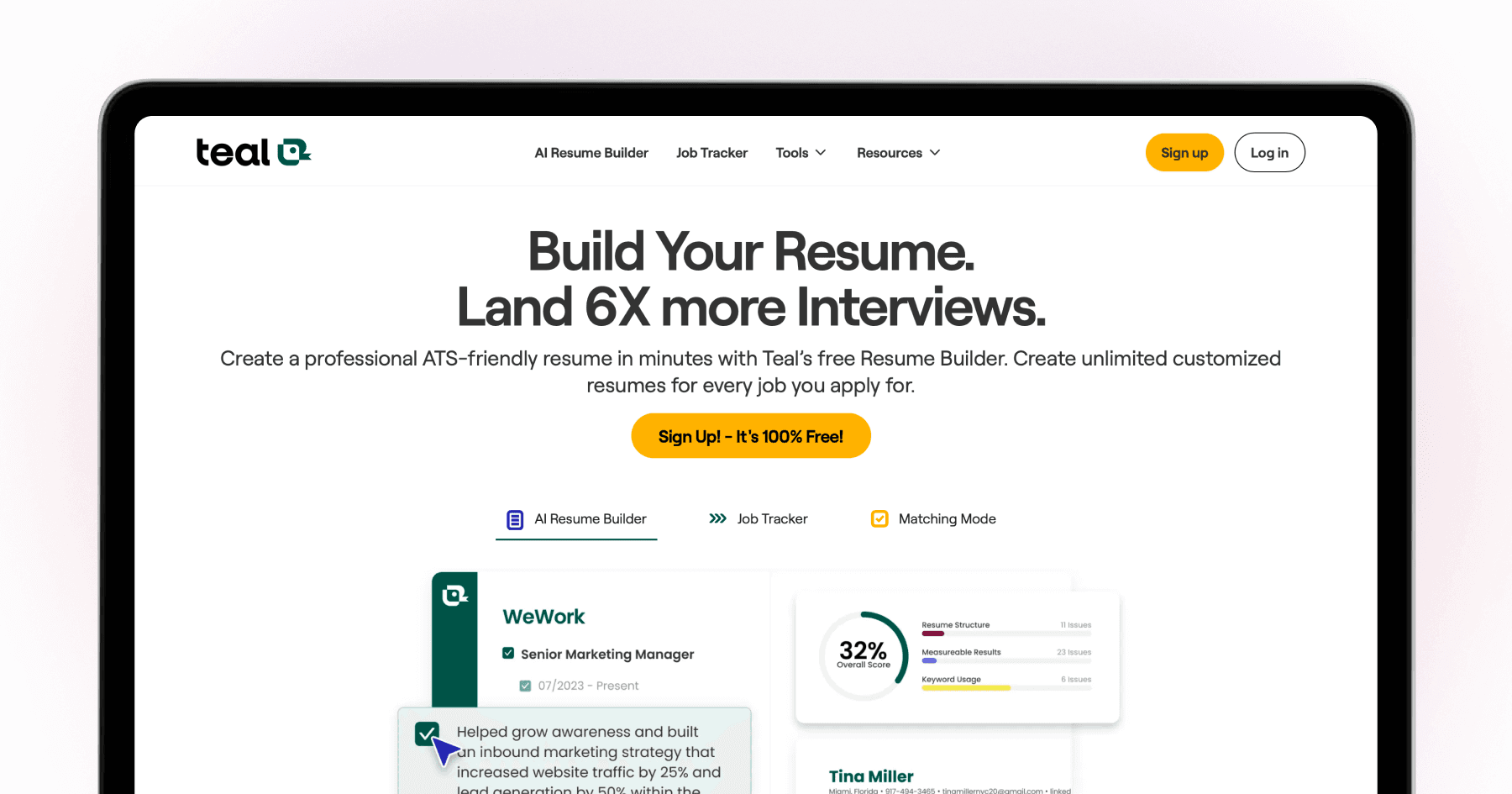
Teal promises to organize your entire job search in one place. Here's what it actually delivers, what it costs, and how it compares to alternatives.
Auto-apply tools promise to handle job applications for you. Some deliver. Others just automate your way to rejection. Here's the complete breakdown.
The hiring process has unwritten rules that HR teams never explain. Here's what's actually happening behind the scenes — and how to use it to your advantage.
Recruiters search LinkedIn for candidates every day. Here's how to position yourself to show up in those searches — and get approached for the right roles.
Easy Apply makes applying fast. But fast and effective aren't the same thing. Here's the honest breakdown of when it works and when it doesn't.
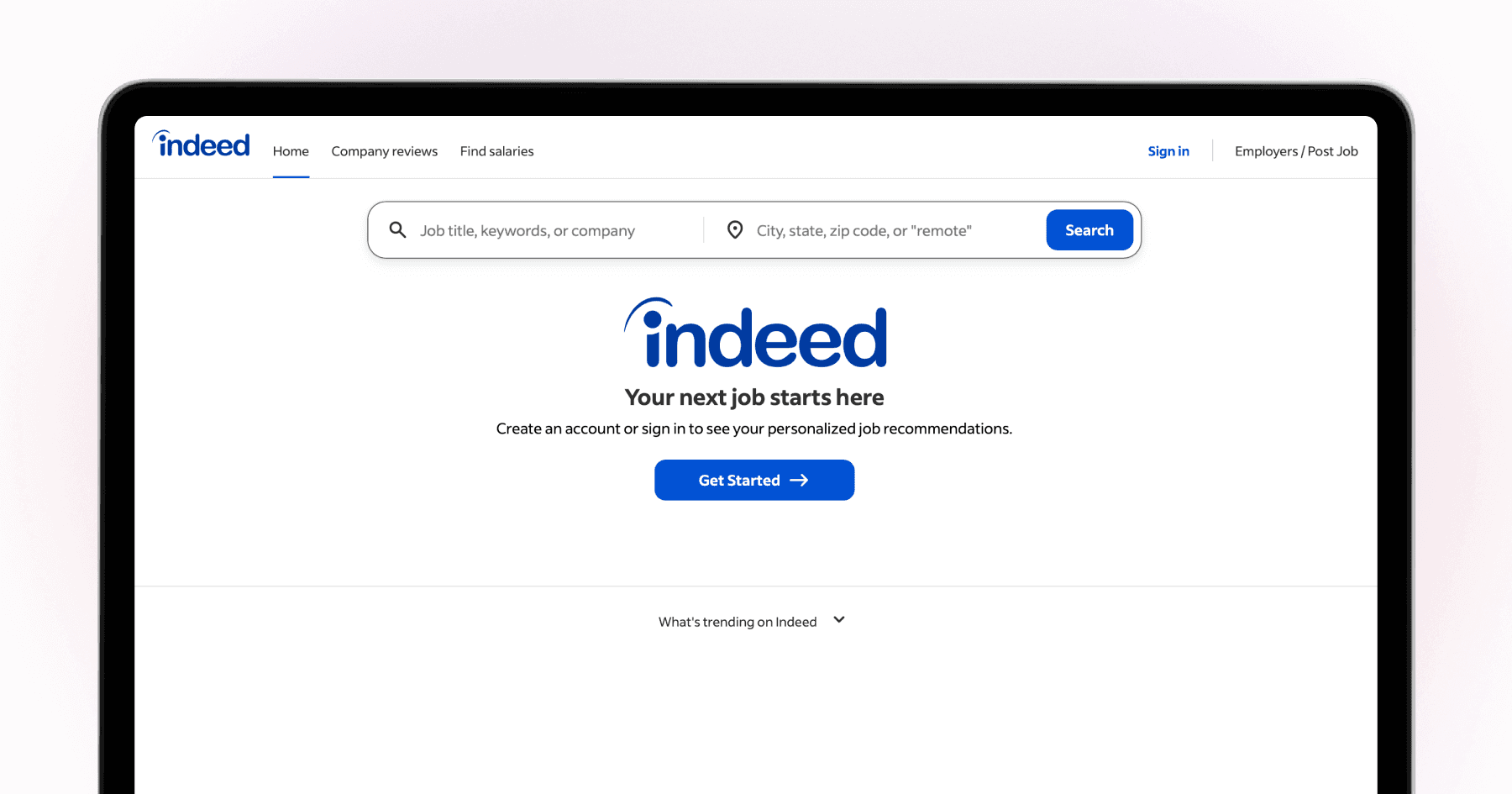
Indeed is the world's largest job site. Most job seekers use it like a search engine and miss most of what makes it useful. Here's how to use it properly.
Both are essential job search tools. But they work very differently — and depending on your industry and goals, one will significantly outperform the other for you.
Most LinkedIn messages to recruiters get ignored. Here's what to write — and what to avoid — to get a response and start a useful conversation.
Networking
Traditional networking advice assumes you enjoy it. Here's a practical approach for people who don't — and why genuine connection is more effective than events anyway.
A referral dramatically improves your chances of getting an interview. Here's who to ask, how to ask, and what to say — without making it awkward.
Salary
The best-paying roles are often filled before they're ever publicly posted. Here's how to find and get access to opportunities that most job seekers never see.
A degree is not the only path to a well-paying career. Here are the roles that pay well, value skill over credentials, and are genuinely accessible without a university degree.
Most candidates accept the first salary offer without negotiating. Most employers expect negotiation and have room above the initial number. Here's how to do it properly.
No work history doesn't mean no CV. Here's what to include, how to frame it, and how to compete with candidates who have a head start.
The job market for graduates has changed. Here's what's different, what still works, and how to build a job search strategy that gets results when you're starting out.
Some do. Some don't. The answer depends on the role, the company, and what your cover letter actually says. Here's what the research shows.
The black box between applying and hearing back is less mysterious than it seems. Here's exactly what happens to your application — and why you might not hear back.
Job descriptions rarely say what they mean. Here's how to decode the language, spot the real requirements, and decide whether it's actually worth applying.
A significant proportion of job listings aren't for roles that are actively being hired. Here's what ghost jobs are, why they exist, and how to protect your job search from them.
Being ignored after an interview is demoralizing. Here's why it happens, what it usually means, and what — if anything — you can do about it.
iPhone
Android
Scan to download
Download on the
App Store
Get it on
Google Play