Applying to jobs manually is a full-time job in itself. Here's the system that lets you submit 100 quality applications a week without losing your mind.
The average job seeker spends around 11 hours a week on job applications. That's not 11 hours of interviewing, networking, or doing anything that moves the needle. That's 11 hours filling out the same information into different ATS forms, tweaking the same resume paragraph for the sixth time, and writing cover letters that may or may not be read by anyone. And most people doing this are getting back almost nothing for it. A 2 to 5% response rate is considered normal in most industries. That means for every 100 applications, 95 to 98 go nowhere.
There's a better system. Here's how it works.
TLDR
The problem with most job searches isn't effort. It's that the effort is going into the wrong things.
"Spray and pray" doesn't work. Neither does applying to two jobs a week and waiting.
The system that produces results: one strong base resume, AI-powered tailoring per application, automated submission, and consistent tracking.
100 applications a week is achievable without spending 100 hours doing it. The tools section at the bottom explains how.
Why "spray and pray" doesn't work
Sending the same generic resume to 200 jobs a week sounds like a numbers game, and in theory more applications should mean more responses. In practice, it doesn't work that way.
ATS software filters out roughly 75% of resumes before a human sees them. Generic resumes, the ones without keywords matched to the specific job description, score lower and get filtered at a higher rate. So the spray-and-pray approach not only wastes your time. It actively produces a lower response rate per application than a tailored approach would, because most of those 200 applications are never read.
There's also a quality signal problem. Recruiters can tell the difference between a resume that was written for their role and a resume that was written for any role. When every application you send looks like it was prepared specifically for that company and that position, it signals investment. When it looks like one of a thousand copies sent out by a Chrome extension, it signals the opposite.
The goal is not volume for its own sake. It's quality at scale: enough tailored applications going out per week that the numbers work in your favor, without sacrificing the relevance that actually produces responses.
The smarter approach: quality at scale
Here's the framework that works.
You need enough applications going out weekly to generate consistent interview activity, typically somewhere between 20 and 40 tailored applications per week for most roles and markets. In competitive industries or senior roles, you may need more. In niche fields with fewer openings, you may need fewer.
But you also need each application to be worth sending. That means a resume that reflects the language of the specific job description, a cover letter that speaks to the role rather than recycling a template, and applications targeted at roles you're genuinely qualified for.
The system that makes this achievable without it consuming your life has four steps.
Step 1: Build one strong base resume
Everything starts here. Before you worry about volume, you need a solid foundation document that accurately represents your experience, uses results-focused language rather than task descriptions, and is structured in a way that ATS systems can parse cleanly.
This document is not what you send anywhere. It's the source material. Think of it as the master version that any AI tool or manual tailoring process will use to generate application-specific versions. The stronger and more complete this document is, the better every tailored version will be.
A strong base resume has a few key characteristics:
It leads with outcomes. Every bullet point under a role describes what you produced, not what you were responsible for. Numbers where possible: percentages, revenue figures, team sizes, time saved, growth achieved. If you can't find a number, describe the outcome at minimum.
It's ATS-clean. Single-column format, standard section headings ("Work Experience," "Education," "Skills"), no tables or graphics, no information in headers or footers. Content that can be read cleanly as plain text top to bottom.
It's appropriately scoped. One or two pages depending on your experience level. Nothing irrelevant to the types of roles you're targeting.
It's honest. Every claim on this document needs to be defensible in an interview. Do not inflate job titles, fabricate metrics, or claim proficiency with tools you've only briefly encountered. These things get tested.
Once you have this document, you're ready to scale.
Step 2: Use AI to tailor it for each role
This is the step that most people skip because it takes too long manually, but it's also the step that drives most of the improvement in response rates.
Tailoring means adjusting the language of your resume to match the specific job description you're applying to. Not rewriting your entire work history. Just ensuring that the skills and experience you actually have are described using the language the job description uses, so the ATS recognizes the match and the human reviewer sees the relevance immediately.
Done manually, this takes 20 to 30 minutes per application. At 40 applications a week, that's 13 to 20 hours of resume editing. That's clearly not sustainable.
The tools that solve this problem use AI to analyze the job description and automatically rewrite the relevant sections of your resume to match it. When it works well, the output is a resume that reads as specifically written for that role, in your voice, with the right keywords in the right places, produced in seconds rather than half an hour.
Ace handles this automatically for every application you swipe on. You upload your base resume once. From that point forward, every job you apply to gets a tailored version without any additional work on your end.
Step 3: Automate the submission process
Tailored documents solve the content problem. Automation solves the time problem.
Filling out ATS forms manually is the most time-consuming and least intellectually valuable part of a job search. You're entering the same name, address, employment history, and education into slightly different web forms, over and over again. There is nothing about this process that requires your judgment or your creativity. It's purely mechanical repetition, and it's exactly the kind of task that software should be handling.
Manual application to a single role, including navigating to the career page, filling out the ATS form, uploading documents, and answering any screening questions, takes between 15 and 45 minutes depending on the employer's system. At 40 applications a week, that's 10 to 30 hours. Even at 20 applications, you're looking at 5 to 15 hours of form-filling.
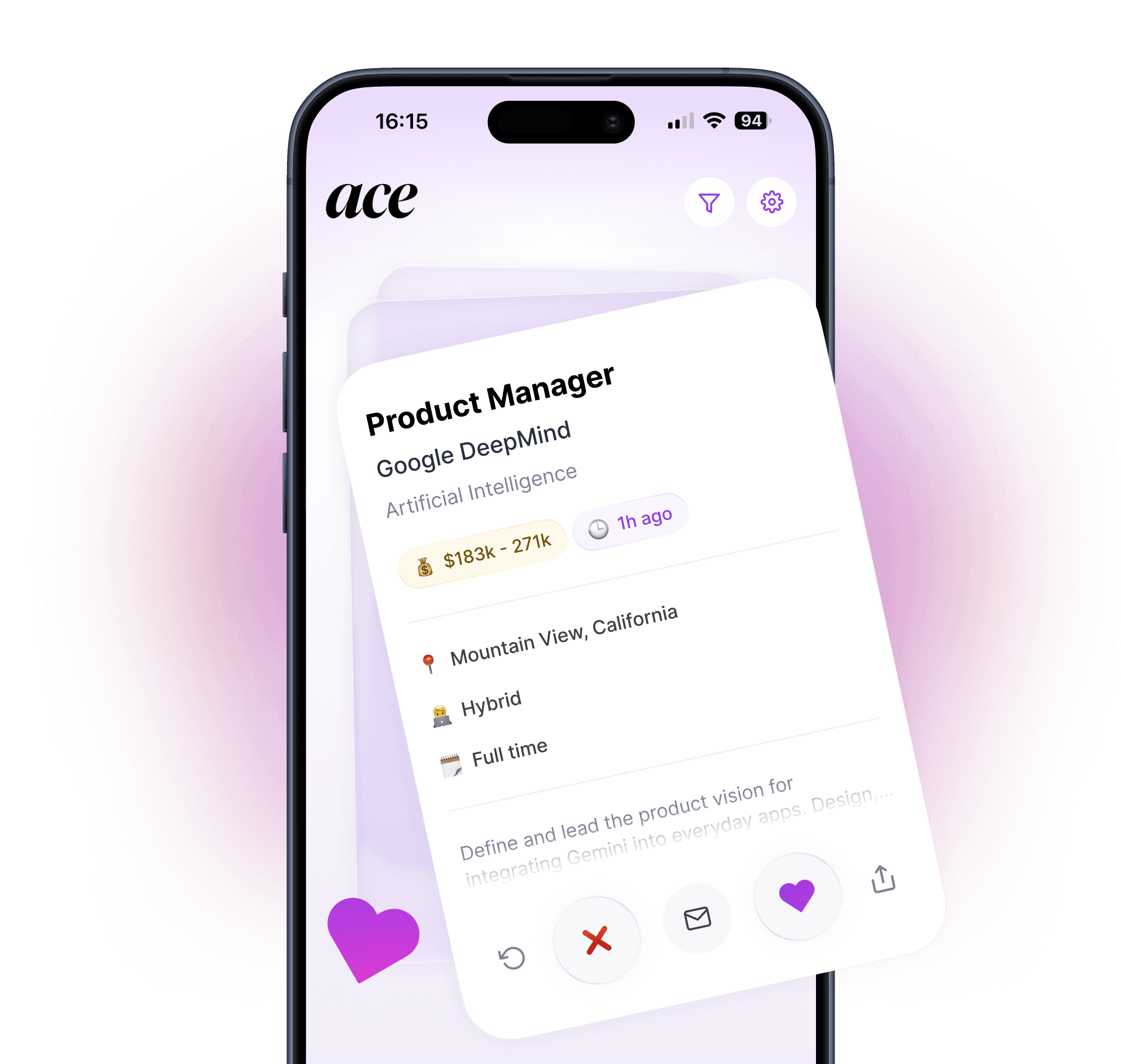
Automation tools that complete the full application on your behalf cut this to near zero. You choose the job. The tool submits it. You get a notification. Ace does exactly this - swipe right, and the full application lands on the company's career page without you touching a form.

Step 4: Track everything in one place
Volume without tracking is chaotic. Once you're applying to 20 or more jobs per week, you will lose track of which companies you've applied to, when you applied, whether you've heard back, and what follow-up you need to do. That creates two problems: you may apply to the same role twice, which is embarrassing, and you may miss follow-up opportunities at companies you're actually excited about.
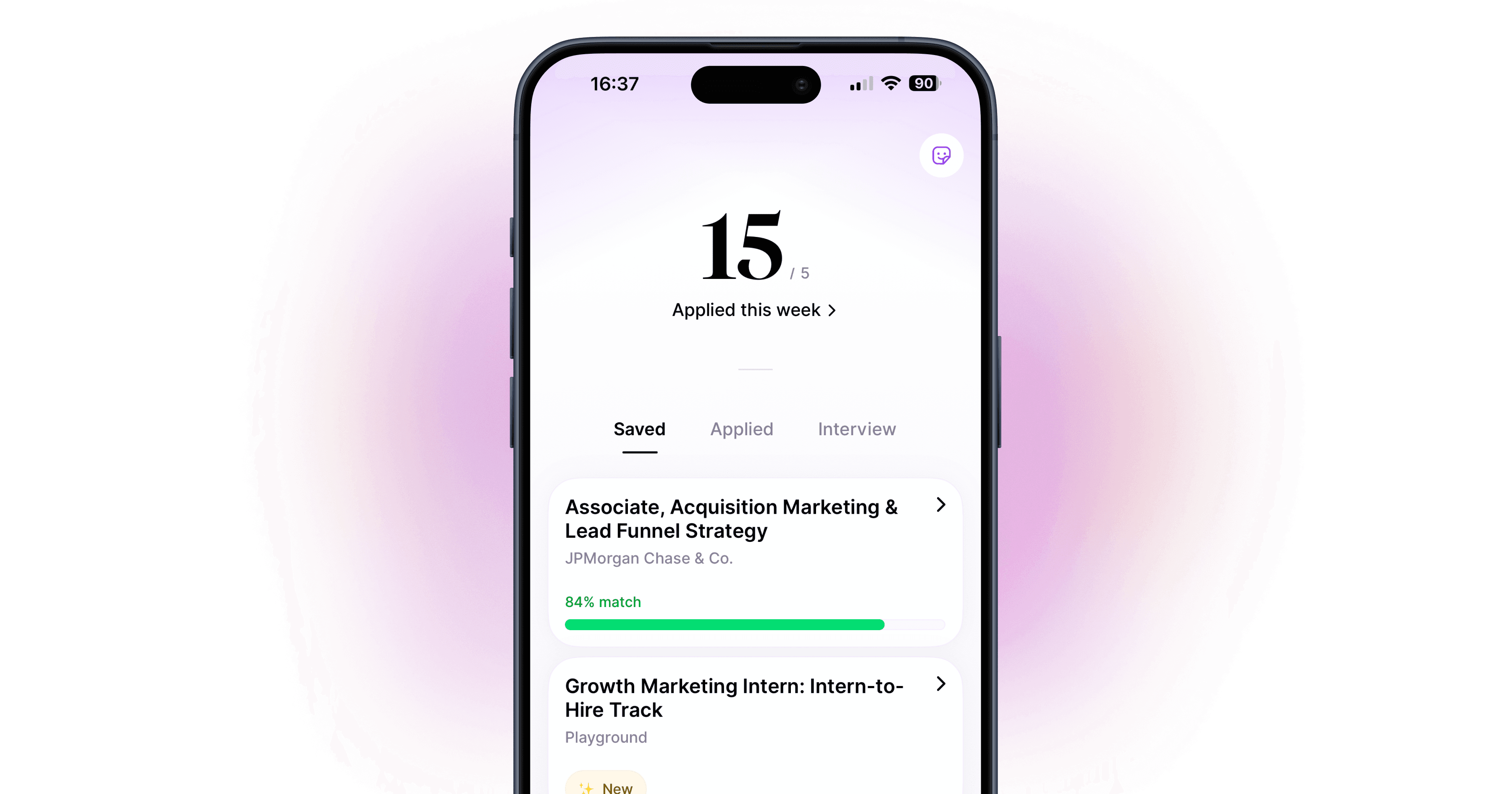
Build a simple tracking system from day one. You don't need elaborate software. A spreadsheet with columns for company name, role title, date applied, status, and next action is enough to stay organized. Many ATS-integrated job search tools include a built-in tracker. If yours does, use it.
The tracking system also gives you data. After a few weeks, you can see which types of roles are generating responses and which aren't. You can identify whether certain industries or company sizes are responding at higher rates. You can spot patterns in where the process is breaking down, whether that's at application, first response, phone screen, or later in the process, and adjust accordingly.
A job search without tracking is guesswork. A job search with tracking is a process you can measure and improve.
The tools that make this possible
The system above requires two things to work at scale: good AI tailoring and reliable automation. Here's what the current landscape looks like.
Ace is the tool built specifically around this system. Upload your resume, set your preferences, and swipe through a curated feed of matched jobs. Each swipe generates a tailored resume and cover letter and submits the full application automatically. The job matching pulls from around 8 million new roles per month, including positions sourced directly from company career pages. Application tracking is built in. The whole thing runs on iOS and Android. If your goal is 20 to 40 quality applications a day without spending 8 hours doing it, this is the most direct path to that.
AIApply is worth mentioning for job seekers who want more hands-on control over their application documents. The AI writing tools are strong, and the ATS scanner is genuinely useful for understanding what keywords a specific role is looking for. Auto-apply is available but structured as an add-on with extra credits. It's a good fit for selective, document-focused job seekers. Less suited to high-volume automation. See our full comparison: AIApply vs Ace.
LazyApply and similar Chrome extensions can handle LinkedIn Easy Apply automation, but they send the same resume to every job. The volume is there. The tailoring isn't. In a market where ATS filtering is the first obstacle, this approach has a lower return on investment than it might appear.
A broader breakdown of all the tools worth considering, including their strengths and limitations, is in our full roundup: Best AI Job Search Tools in 2026.
What 100 applications a week actually looks like
Let's make this concrete. Here's how a realistic high-volume job search week breaks down with the right tools in place.
Monday through Friday, 30 minutes in the morning: Open Ace during your commute or over coffee. Swipe through 20 to 25 matched jobs. Each swipe triggers an automatic tailored application. By the time you finish your coffee, 20 to 25 applications are in progress or submitted. Check the tracking dashboard to see any notifications or updates from the previous day.
Monday through Friday, 30 minutes in the evening: Review any emails from employers. Respond to any requests for information or scheduling. Log any updates in your tracker. Spend any remaining time doing targeted research on companies that have responded, preparing for any upcoming calls, or refining your preferences in the app based on the types of roles getting responses.
Weekend, one hour: Review the week's activity in your tracker. Note the response rate, which types of roles are getting traction, and whether any follow-ups are needed. Adjust your job preferences or base resume if the data suggests something isn't working.
That's roughly 6 to 7 hours per week. At 20 to 25 applications per weekday, you're sending 100 to 125 applications per week, all tailored, all submitted automatically, all tracked. The rest of your job search time goes into the things that actually require human judgment: preparing for interviews, researching companies, and having real conversations with people in your network.
The 11 hours a week the average job seeker spends on applications can be reduced to about an hour of actual work. The other 10 hours can go into the parts of the job search that AI tools genuinely can't do for you.
For a deeper look at making sure your resume is set up to pass ATS screening before you start applying at volume, see: How to Beat Applicant Tracking Systems in 2026.
And for the specific resume mistakes that cause rejection even at the initial screening stage, this is worth reading first: 10 Resume Mistakes That Get You Instantly Rejected.
Start applying smarter with Ace - free on iOS and Android
Questions about your job search strategy? Reach out at info@aceapp.ai.
FAQ
Is applying to 100 jobs a week realistic?
With the right tools, yes. Manually, 100 applications a week would require 25-50 hours of form-filling alone. With an auto-apply tool like Ace that handles tailoring and submission automatically, applying to 20-25 jobs per day takes around 30 minutes — making 100 applications per week achievable in roughly 6-7 hours total, including tracking and follow-up.
Is it better to apply to lots of jobs or be selective?
Both extremes are wrong. Applying to 200 identical generic resumes produces low response rates because most get filtered by ATS. Applying to only 2-3 roles per week is too slow to generate consistent interview activity. The approach that works is 20-40 tailored applications per week, enough volume that the numbers work in your favor, with enough quality per application that ATS and recruiters respond.
How do I apply to lots of jobs without getting overwhelmed?
Four steps: build one strong base resume, use AI to tailor it for each role automatically, use a tool that submits the full application on your behalf, and track everything in one place. The tracking step is what prevents the chaos: without it, you lose track of what you've applied to, when, and what follow-up is needed.
What is the best app for applying to lots of jobs?
Ace is built specifically for high-volume quality applications. You swipe through matched jobs, and Ace tailors your resume and cover letter for each one and submits automatically. The application tracking dashboard keeps everything organized. It runs on iOS and Android, so the job search happens around your existing schedule rather than requiring dedicated laptop time.
How long should a job search take?
It varies significantly by industry, seniority level, and the current hiring market. For most roles, a focused job search applying to 20-40 tailored applications per week typically yields interview activity within 2-4 weeks. Senior roles, niche industries, or competitive markets can take longer. The fastest searches combine high application volume with strong ATS-optimized materials.