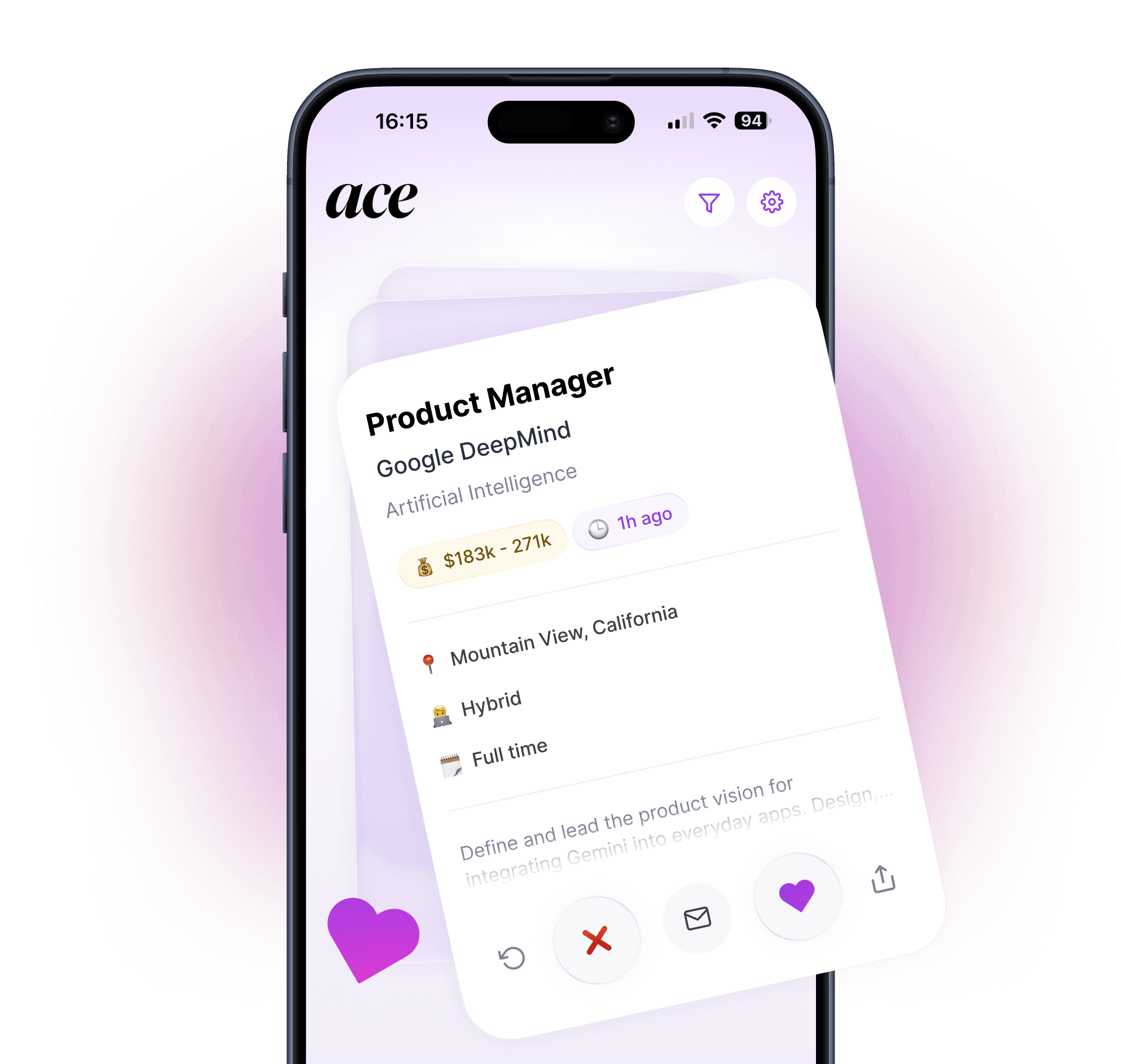
Most cover letters make the same five mistakes. Here's what they are, why they kill your application, and exactly how to fix each one.
A lot of job seekers either skip the cover letter entirely or write one and wonder why it doesn't seem to be helping. The skip-it camp has a point: many hiring managers don't read cover letters at all, especially for high-volume roles. But when a recruiter does read them — particularly for senior positions, creative roles, or companies with strong cultures — a bad cover letter can cancel out a good resume. And a well-written one is one of the few ways to make a genuine impression before the interview.
Here are the mistakes that make cover letters ineffective, and what to write instead.
TLDR
Most cover letters are ignored because they're too long, too generic, or open with the wrong sentence.
The first line is the only one guaranteed to be read. It needs to give a reason to keep reading.
Cover letters that work speak to the specific role and company, not to the candidate's general qualities.
For high-volume job searching, writing a genuine cover letter for every application isn't realistic — but AI tools can generate strong role-specific letters automatically.
Mistake 1: Opening with "I am writing to apply for..."
This is the most common cover letter opening in existence, and it tells the recruiter nothing they don't already know. They know you're applying. You applied. The opening sentence of your cover letter is prime real estate — the one line most likely to be read — and "I am writing to apply for the Marketing Manager position" wastes it entirely.
What to write instead: Open with something specific to the role or company. A concrete reason you want this particular job. A brief statement of the most relevant thing you bring. Something that makes the recruiter want to read the second sentence.
"After three years scaling email programs for B2B SaaS companies from 10k to 200k subscribers, this role's focus on retention marketing is exactly the problem I want to work on next."
That's not a masterpiece. But it's specific, it's relevant, and it creates a reason to keep reading.
Mistake 2: Summarizing your resume
A cover letter that says "as you can see from my resume, I have five years of experience in..." is a cover letter that adds nothing. The recruiter has your resume. They don't need it paraphrased.
A cover letter's job is not to summarize your history. It's to make the argument for why your specific background is a strong fit for this specific role — the case that your resume implies but doesn't explicitly make.
What to write instead: Choose the one or two experiences from your background most directly relevant to this role's biggest requirements. Explain the connection. Show that you understand what the company needs and that you've done something that maps to it.
Mistake 3: Making it too long
Nobody is reading a full-page cover letter for most roles. The sweet spot is three short paragraphs: why this role, what you bring, why this company. That's it. Under 250 words. If it doesn't fit in three paragraphs, it hasn't been edited enough.
What to write instead: Draft it however long it comes out, then cut it by 40%. Every sentence that doesn't directly advance the argument for hiring you should be removed.
Mistake 4: Writing the same letter for every job
A cover letter that's been clearly copy-pasted with the company name swapped out is immediately obvious to anyone who reads a lot of applications. It signals that you didn't put specific thought into this role, which is exactly the impression a cover letter is supposed to counter.
What to write instead: Tailor the opening and the "why this company" section for each application. The middle paragraph about what you bring can stay largely consistent if the roles are similar — but the framing should connect specifically to what this employer is looking for.
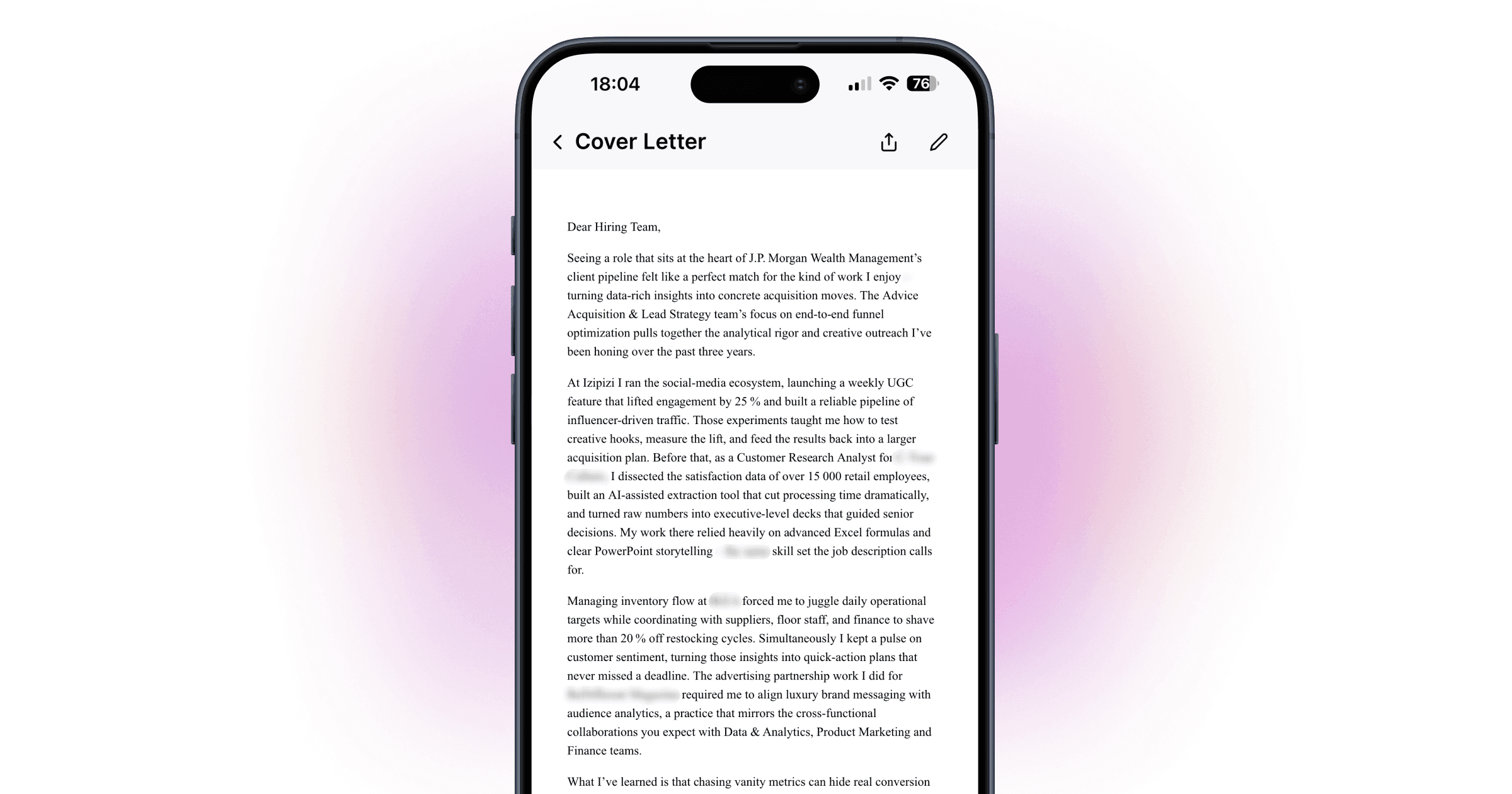
At volume, writing a genuinely tailored cover letter for every application isn't realistic. Ace generates a role-specific cover letter for every job you apply to automatically, using the job description to write something that speaks to that specific role.
Mistake 5: Not including one at all when it matters
For roles where a cover letter is optional, most applicants skip it. That means submitting one — even a short, well-written one — immediately puts you in a smaller pool of considered candidates. For senior roles, client-facing positions, or companies where communication is part of the job, a cover letter can be decisive.
The rule: If the role involves writing, communication, or a strong cultural fit component, write the cover letter. If it's a high-volume technical role where the assessment is primarily skills-based, the cover letter matters less.
At serious application volume, writing a tailored cover letter for every role isn't realistic — which is exactly why Ace generates a role-specific cover letter for every application automatically, based on the actual job description, before submitting.

What a good cover letter actually looks like
Three paragraphs. Under 250 words. Structured as:
Paragraph 1: Why this specific role at this specific company. Something concrete about what they do or what this role involves that connects to your background or interests. One to three sentences.
Paragraph 2: The most relevant thing you bring. One specific achievement or experience that maps directly to a core requirement of the role. Include a number if you have one.
Paragraph 3: Brief close. Confirm your interest, mention you'd welcome the conversation, and stop there. No excessive enthusiasm, no begging.
That structure, with genuine specificity in each paragraph, will outperform 90% of cover letters received for most roles. The differentiator is always the specificity — a recruiter reading their fiftieth application of the day notices immediately when someone has done real thinking about this role rather than adapting a template.
For help with the resume that accompanies the cover letter: 10 Resume Mistakes That Get You Instantly Rejected.
For a full guide on writing a cover letter from scratch: How to Write a Cover Letter That Actually Gets Read.
The bottom line
The cover letter mistakes that kill applications are all avoidable. A generic opening, a resume recap instead of an argument, a letter that runs to a second page, and copy-paste with a name swap — these patterns turn a potentially decisive document into one that doesn't get read. Fix the opening, make it specific, keep it under 250 words, and the cover letter stops being a liability and starts doing actual work. If writing one for every application isn't realistic at the volume you need, Ace generates tailored cover letters automatically — free on iOS and Android.
FAQ
Do recruiters actually read cover letters?
It varies significantly by role, company size, and recruiter. Research suggests many recruiters skip cover letters for high-volume roles but read them carefully for senior, creative, or culture-driven positions. When in doubt, write one — it can only help and never hurts.
How long should a cover letter be?
Three short paragraphs, under 250 words. If it's longer than that, it hasn't been edited. Recruiters don't have time to read essays, and a concise letter signals that you can communicate efficiently.
Should I address my cover letter to a specific person?
Yes, when possible. Finding the hiring manager's name — usually findable on LinkedIn or the company website — and addressing them directly is a small signal of effort that distinguishes your application from the generic "Dear Hiring Manager" crowd.
Is it bad to use AI to write a cover letter?
No, as long as you edit the output to sound like you and make it specific to the role. A generic AI cover letter that reads as template output is worse than writing nothing. A well-edited AI draft that's genuinely tailored to the role is indistinguishable from a human-written one.
What if the application doesn't ask for a cover letter?
If there's no field for one, don't force it. If the application has an "additional information" field, you can include a brief version there. If neither exists, your resume needs to do all the work.