A generic resume gets filtered out by ATS before a human sees it. Here's how to tailor for each role quickly — and how to automate it entirely.
Most people know they should tailor their resume for each application. Almost no one actually does it, because doing it properly takes 20 to 30 minutes per job. Multiply that by 20 applications a week and you've added 7 hours of document editing to your job search. But the alternative - sending the same generic resume everywhere - produces poor results because ATS software scores your resume against the specific language of that job description. A resume that isn't written for the role gets filtered before anyone reads it.
There's a better way. Here's how to tailor effectively, how to do it faster, and how to remove the process entirely.
TLDR
ATS software scores your resume against each specific job description. Generic resumes score lower and get filtered out more often.
Effective tailoring takes 20-30 minutes per application manually. At volume, that's unsustainable.
The shortcut: identify the 5-6 key requirements in a job description and mirror that language in your resume's summary and most recent role.
The full solution: use a tool that handles per-application tailoring automatically for every job you apply to.
Why tailoring matters more than people realize
When you apply for a job through a company's career page or job board, your resume usually goes into an ATS — Applicant Tracking System software that scores applications automatically before a recruiter sees them. The scoring is based primarily on keyword matching: how closely does your resume's language match the job description?
A resume that describes your experience in general terms, without mirroring the specific skills, tools, and language of the job description, will score lower than one that does. That score can determine whether you ever reach a human reviewer.
According to research from Jobscan, tailored resumes are significantly more likely to pass ATS screening than generic versions of the same candidate's resume. The experience is identical — only the language changed.
This is why sending the same resume everywhere is a losing strategy even when you're genuinely qualified. You're not being filtered on competence. You're being filtered on language.
Step 1: Read the job description like a brief
Most people read job descriptions to understand the role. For tailoring, read it to extract the brief — the specific language the employer uses to describe what they want.
Highlight every specific skill, tool, qualification, and outcome the description mentions. Pay particular attention to the top 3-4 requirements listed first: these tend to be the highest-weighted in ATS scoring. Note which terms appear more than once. Repetition signals what the employer values most.
Then compare that list to your resume. For every requirement you actually meet, check that your resume uses the same language to describe it. If the description says "project management" and your resume says "led cross-functional initiatives," the ATS may not score them as equivalent.
Step 2: Update your summary first
The professional summary at the top of your resume is the highest-visibility section for both ATS and recruiters. It's also the section that requires the most tailoring because it should speak directly to the specific role.
Write a 2-3 sentence summary that references the key requirements of this specific job and connects them directly to your most relevant experience. Don't use generic phrases like "results-driven professional." Use the language from the description.
This doesn't require rewriting your whole resume. A targeted summary rewrite takes 5-10 minutes and has a disproportionate impact on both your ATS score and how a recruiter reads the rest of your application.
Step 3: Mirror language in your most recent role
After the summary, your most recent role carries the most weight. Go through your bullet points under that role and identify any that describe skills or outcomes mentioned in the job description — then make sure they're using the same terminology.
If the job description mentions "stakeholder management" and your bullet says "communicated with senior leaders," update it to include the phrase from the description. The underlying experience is the same. The language is now matched.
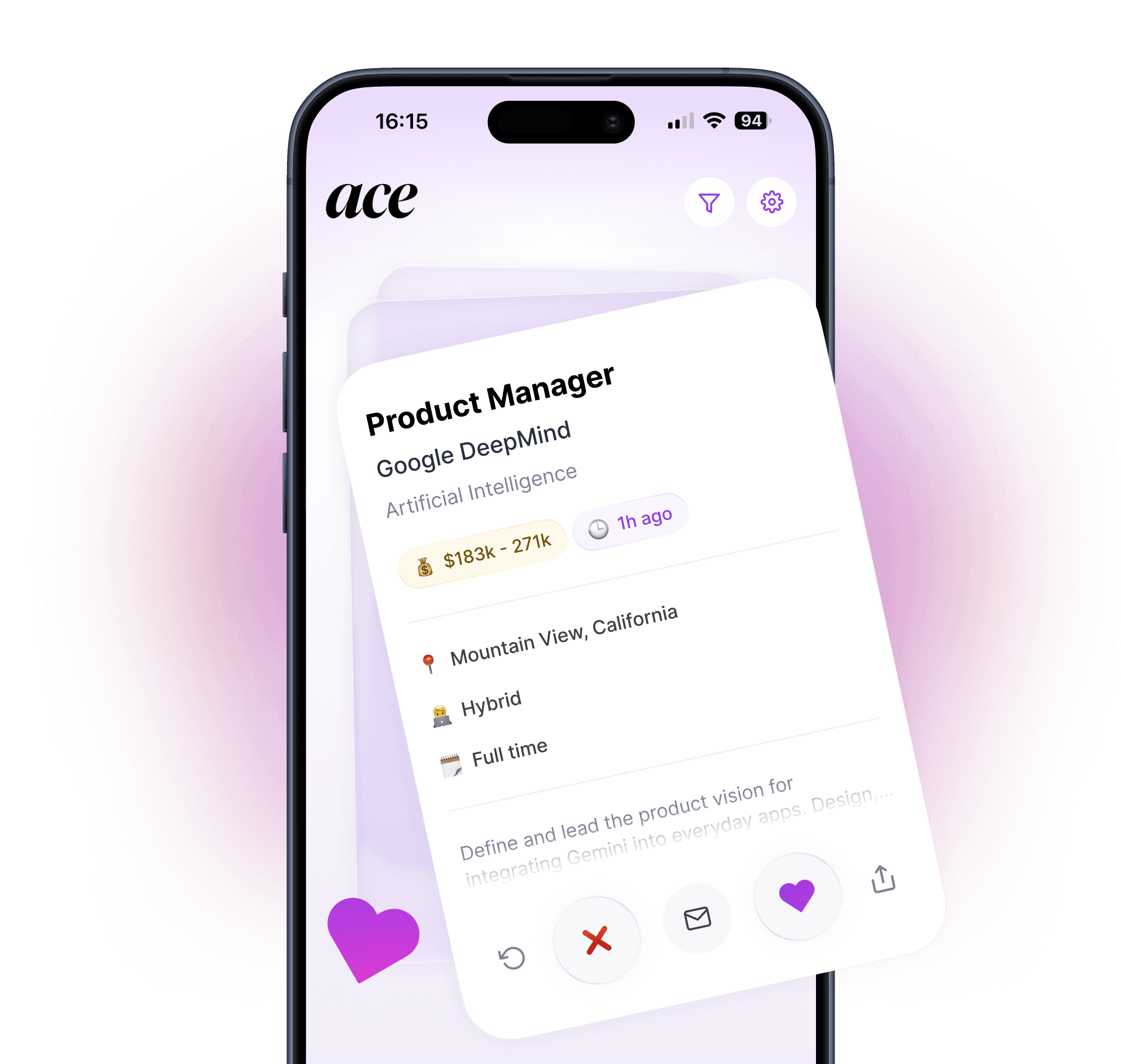
Ace does all of this automatically for every job you swipe on — free on iOS and Android
Step 4: Check keywords against the full description
Before submitting, do a final check. Read through your updated resume and the job description side by side. For every key term in the description, confirm it appears somewhere on your resume, naturally, in context. Also include both the acronym and full term for technical skills when both are in common use (e.g., "Search Engine Optimization (SEO)").
Free tools like Jobscan let you paste your resume and a job description and score your keyword match instantly. It takes two minutes and catches obvious gaps before they cost you an interview. If you'd rather skip this process entirely, Ace does the keyword analysis and rewriting automatically for every job you swipe on — no manual checking needed.

How to remove the tailoring step entirely
The manual process above works. It's also time-consuming, and at any serious application volume it becomes its own job.
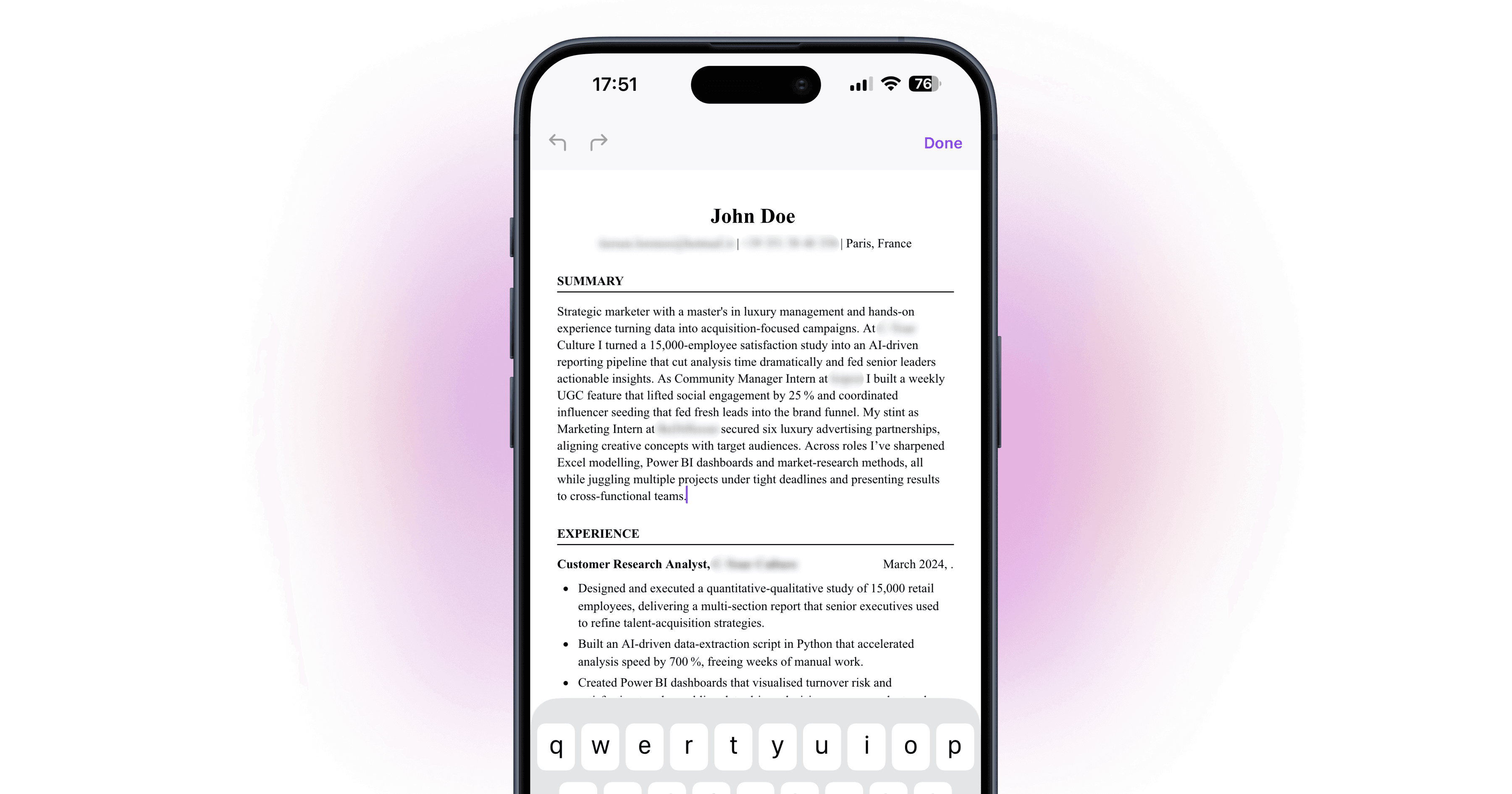
The practical alternative is to use a tool that analyzes the job description and rewrites your resume automatically before each application. Ace does this for every job you swipe on — the tailored resume and a matching cover letter are generated and submitted without you touching a document. You upload your base resume once. From that point, every application goes out tailored.
If you're applying to 20 or more roles per week, the difference between manual tailoring and automated tailoring is 7-10 hours per week of document editing. That time is better spent on interview preparation, networking, and following up on active applications.
The bottom line
Tailoring is the single highest-leverage action in any job search. The difference isn't you versus another candidate — it's the same resume at 45% keyword match versus 78%. One gets filtered. One gets through. At low volume, doing it manually is sustainable. At any meaningful volume, the math stops working and you need automation. Ace handles per-application tailoring automatically, so every application goes out optimised whether you're sending five a week or fifty.
For a full guide to building the base resume that makes tailoring effective: 10 Resume Mistakes That Get You Instantly Rejected.
For a guide on how ATS scoring works in detail: How to Beat Applicant Tracking Systems in 2026.
FAQ
How long does it take to tailor a resume?
Done properly, 20-30 minutes per application manually. With an AI tool that handles it automatically, seconds per application. The manual process is sustainable for selective job searches of 3-5 applications per week; it breaks down for anyone applying at meaningful volume.
Should I tailor my resume if I'm using LinkedIn Easy Apply?
Yes, even Easy Apply roles go through some form of ATS screening on the employer's side. A generic resume will score lower than a tailored one regardless of how the application was submitted.
How different does my resume need to be for each job?
Not completely different. The core work history stays the same. What changes is the language in your summary, the framing of your most relevant bullet points, and keyword coverage. A well-tailored resume might differ from a generic one by only 15-20% of its content — but that 15-20% is what determines whether you clear the ATS threshold.
Can I use the same tailored resume for similar roles?
If two job descriptions are nearly identical, yes. But even small differences in how a company describes a role can affect which keywords score highest. When in doubt, tailor specifically.
What's the easiest way to tailor a resume quickly?
The fastest manual approach: rewrite just the summary and check keywords in your most recent role. The fastest overall approach: use Ace, which handles tailoring automatically for every application.