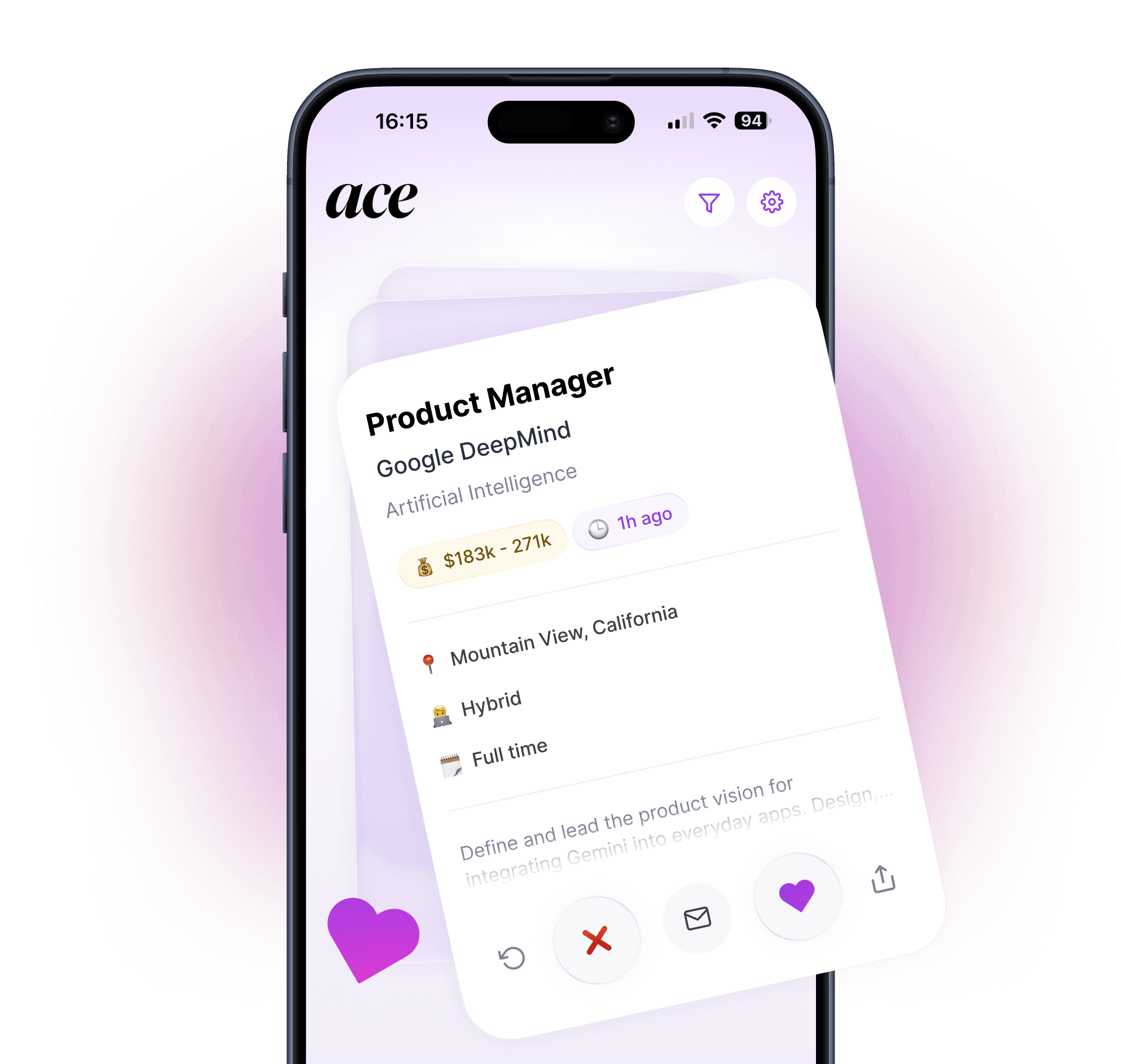
We tested 8 AI job search tools to see which ones actually help you land interviews. Here's what worked, what flopped, and what's worth your money.
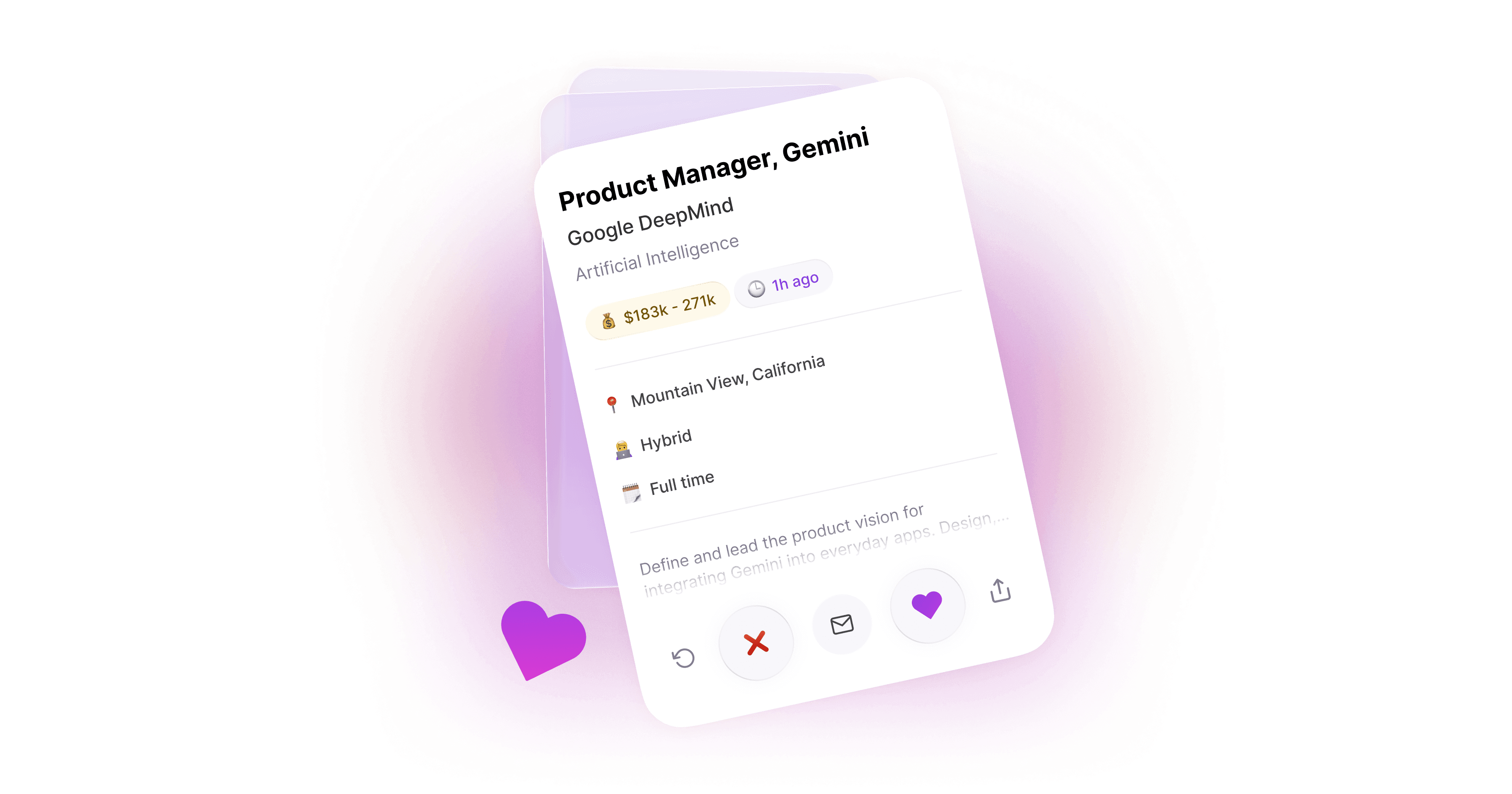
The average job seeker sends out dozens of applications a week. Most hear nothing back. AI job search tools promise to fix that by automating the grunt work, tailoring your resume, and even applying on your behalf. But after testing eight of the most popular options, one thing is clear: most of them overpromise and underdeliver.
This is a breakdown of the tools that actually work, the ones that waste your time, and a few that might actively hurt your chances if you're not careful.
TLDR
Ace is the strongest all-in-one option. It matches you to jobs, tailors your resume and cover letter for each one, and auto-applies directly on company websites. Available on iOS and Android.
Sprout has a similar swipe-to-apply concept, though some users report concerns around resume tailoring consistency and auto-apply reliability.
AIApply is solid for resume and cover letter generation, but its auto-apply is an add-on that costs extra and feels bolted on.
LazyApply automates LinkedIn Easy Apply at volume, but sends the same generic resume everywhere. Quantity over quality.
Sorce is early-stage with a fun interface, but job matching inconsistencies and limited features hold it back.
AutoApplier takes a desktop-first, Chrome extension approach. Powerful for LinkedIn automation, but no mobile app and a steeper learning curve.
RemoteJobsFinder is a paid job discovery platform, not a real application tool. You're mostly paying for job alerts you can find free elsewhere.
Rezi is a strong resume builder with good ATS optimization, but it doesn't do job matching or auto-apply. It's a writing tool, not a job search tool.
How we evaluated these tools
We looked at four things:
Auto-apply reliability. Does the tool actually submit applications, or does it just help you write documents and leave the rest to you?
Resume tailoring. Does it customize your resume for each job, or blast the same version everywhere?
Job matching quality. Are the jobs it surfaces actually relevant, or is it padding the list with garbage?
Price vs. value. Is it worth what you're paying, especially if you're between jobs and watching every dollar?
Every tool on this list was evaluated based on publicly available features, user reviews, and where possible, hands-on testing.
1. Ace - Best for auto-applying with tailored resumes
Ace works like this: you upload your resume, set your preferences, and swipe through jobs the app surfaces for you. When you swipe right, Ace rewrites your resume and cover letter to match that specific role, then applies on the company's website on your behalf. No forms to fill out. No copy-pasting the same information into Workday for the 50th time.
Try Ace free on iOS and Android
What makes it different from most tools on this list is that the tailoring happens per application. Each resume is rewritten to match the job description and pass ATS filters, but it's done in your voice. Not generic AI fluff that reads like ChatGPT wrote it in 10 seconds.
The job matching is surprisingly good. Ace scans around 8 million new roles every month and shows you the ones that actually fit your profile. You're not scrolling through hundreds of irrelevant listings. You're swiping through a curated stack of jobs that make sense for your background, with match percentages so you can see why.
It's mobile-first, which matters more than people think. Most job seekers aren't sitting at a desk all day with their laptop open. They're on the train, on a break, waiting for a meeting. Being able to swipe through jobs and fire off tailored applications from your phone changes how many roles you can realistically apply to in a week.
Key features:
Swipe-to-apply job discovery across millions of roles
AI-tailored resume and cover letter for every single application
Auto-apply directly on company career pages
Application tracking dashboard
Works on iOS and Android
What's great: The combination of smart matching, per-job resume tailoring, and real auto-apply in one app. Most competitors do one of these things. Ace does all three.
Limitations: It's a newer product, so the user base is still growing. Some niche industries may have fewer listings compared to massive aggregators like Indeed.
Bottom line: Ace is the tool we'd recommend if you want quality applications at scale, without spending your evenings rewriting the same resume over and over.
🤖 Auto-apply: Yes
🧠 Resume tailored per job: Yes
📱 Mobile app: iOS + Android
🎯 Job matching: AI-powered, jobs matched to resume
🆓 Free tier: Yes
💸 Starting price: Free

2. Sprout
Sprout is the most direct competitor to Ace. It uses a similar swipe-to-apply model and markets itself as "Tinder for jobs." You swipe right on a role, and Sprout generates a tailored resume and cover letter, then submits the application for you.
The interface is clean. The concept is sound. And the team has been growing the product quickly since rebranding from Prep AI in mid-2025.
Where Sprout has received criticism is reliability. App store reviews on both iOS and Google Play mention recurring concerns: application failures, duplicate job postings, and resumes that don't pass ATS screening despite the app's claims of optimization. Some users report swiping through the same posting five or ten times in a row, which suggests the job deduplication isn't working well for everyone.
Pricing is also worth flagging. Sprout runs on a credit system where each application costs credits, and the credit packs can add up fast. Based on pricing available at the time of writing, plans start at around $10 per week for a set number of credits, which limits how many applications you can send before needing to top up. Check Sprout's current pricing page for up-to-date figures before signing up.
To read more about Sprout and how it compares to Ace, see also Sprout vs Ace: Which AI Job App Gets You More Interviews?
Key features:
Swipe-to-apply interface
AI-generated resumes and cover letters
Application tracking
Web app and mobile app
Limitations: Some users report application failures, duplicate listings, and ATS compatibility problems. The credit-based pricing can get expensive quickly for active job seekers. Some reviews flag incomplete application submissions.
Bottom line: Sprout has potential, but the execution isn't consistently reliable yet according to user reviews. If you're considering it, test it on a small batch of applications first before committing to a paid plan.
🤖 Auto-apply: Yes
🧠 Resume tailored per job: Yes
📱 Mobile app: iOS + Android
🎯 Job matching: AI-powered
🆓 Free tier: No
💸 Starting price: ~$10/week
3. AIApply
AIApply has been around longer than most tools on this list and has built a large user base (they claim over 800,000 users). It started as a resume and cover letter generator and later added auto-apply as an additional feature.
The resume builder is genuinely good. It analyzes job descriptions and creates tailored application documents that are well-formatted and ATS-friendly. The cover letter generator is one of the better ones out there. If you need help with application documents specifically, AIApply delivers.
The problem is that auto-apply feels like it was bolted on after the fact. The core product is document generation, and the automation layer requires additional credits on top of your subscription. So you're paying for the base plan, then paying again for each automated application. Users on Reddit and Trustpilot have noted that the targeting can be inconsistent, sometimes applying to roles that don't match the criteria you set.
There's also no mobile app to speak of. It's a web-based platform, which means you're tied to your laptop for the full experience.
Key features:
AI resume builder and cover letter generator
ATS scanner and optimizer
Auto-apply (add-on with extra credits)
Mock interview practice
Follow-up email generator
Limitations: Auto-apply costs extra credits on top of the subscription. No native mobile app. The automation can apply to irrelevant roles if filters aren't set carefully. Desktop-only workflow limits when and where you can job search.
Bottom line: Strong for resume and cover letter creation. Less convincing as a full job search automation tool. If you already have a resume you're happy with and just want auto-apply, look elsewhere.
🤖 Auto-apply: Add-on
🧠 Resume tailored per job: Yes
📱 Mobile app: No
🎯 Job matching: Basic filters
🆓 Free tier: No
💸 Starting price: ~$24/month
4. LazyApply
LazyApply takes a brute force approach. It's a Chrome extension that automates LinkedIn Easy Apply and similar one-click application flows. Set your criteria, turn it on, and it fires off applications while you do something else.
The appeal is obvious: volume. LazyApply can submit dozens of applications per day without you touching anything. For roles that use LinkedIn's Easy Apply button, it's fast and mostly reliable.
The catch is that LazyApply sends the same resume to every job. There's no per-application tailoring, no rewriting, no keyword optimization. You're essentially mass-mailing a single document to hundreds of companies and hoping something sticks. In a market where ATS systems are filtering out 75% of resumes, this spray-and-pray approach has real downsides.
Several users also report that LazyApply occasionally autofills screening questions incorrectly, which can lead to immediate rejections for things like work authorization or salary expectations that don't match what you'd actually put.
Key features:
Chrome extension for LinkedIn Easy Apply automation
Bulk application submission
Basic application tracking
Referral email generation
Limitations: No resume tailoring per job. Sends the same document everywhere, which means lower ATS pass rates. Can autofill screening questions with wrong answers. Desktop-only, requires your laptop to be open while it runs. Quality of applications is low compared to tailored approaches.
Bottom line: High volume, low quality. If you want to blanket LinkedIn with applications and don't care about tailoring, it works. But don't expect high response rates from recruiters who are already drowning in identical-looking resumes.
🤖 Auto-apply: LinkedIn only
🧠 Resume tailored per job: No
📱 Mobile app: No
🎯 Job matching: LinkedIn filters
🆓 Free tier: No
💸 Starting price: ~$29/month
5. Sorce
Sorce is a Y Combinator-backed app that uses the same swipe-to-apply model as Ace and Sprout. It was founded in 2024 by three college students and has generated some buzz, particularly on TikTok.
The idea is solid and the app looks good. When you swipe right, Sorce's AI agent navigates to the company's website and applies on your behalf. They've recently added custom resume generation per application, which is a step in the right direction.
But in practice, Sorce is still finding its feet. Job matching has proven inconsistent for some users, and multiple reviewers on the App Store and Google Play describe getting results that feel irrelevant to their search - including roles in completely different fields. Country and location filters have also been flagged as unreliable in user reviews. The free tier is very limited: 5 swipes per day, which barely gets you started.
The paid plan runs approximately $15 per week or $40 per month for unlimited swipes - check their current pricing page as these figures can change. That's on the higher end for a tool that is still maturing.
Key features:
Swipe-to-apply mobile interface
AI agent that applies on company websites
Custom resume generation (recently added)
Application tracking
Limitations: Job matching quality has been flagged in user reviews, with some reporting irrelevant results. Free tier is very limited (5 daily swipes). Paid pricing is relatively high for the current feature set. Product is still early-stage and developing rapidly.
Bottom line: Interesting concept and worth watching as the product develops. Based on current user reviews, it's not yet the most reliable choice for a serious job search. Keep an eye on it, but verify it's working well for your profile before relying on it as your primary tool.
🤖 Auto-apply: Yes
🧠 Resume tailored per job: Recently added
📱 Mobile app: iOS + Android
🎯 Job matching:AI-powered
🆓 Free tier: 5 swipes/day
💸 Starting price: ~$15/week
6. AutoApplier
AutoApplier takes a different approach from the mobile-first apps on this list. It's primarily a Chrome extension and web-based AI agent that automates job applications across LinkedIn and other ATS platforms like Workday, Greenhouse, and Lever.
The standout feature is the AI Job Agent. You tell it what roles you're looking for, and it opens a real browser, navigates to company career pages, fills out application forms, and submits on your behalf. It also has an Interview Buddy feature that listens to live interviews and suggests answers in real time, which is either brilliant or terrifying depending on how you feel about that kind of thing.
The downside is complexity. AutoApplier is built for power users who are comfortable with browser extensions, configuring search parameters, and monitoring automated processes. There's no mobile app. The setup process takes more effort than swipe-to-apply tools. And because it's primarily built around LinkedIn automation, you're limited to the roles available through Easy Apply and the ATS platforms it supports.
Pricing varies by feature. The Chrome extension, AI Job Agent, and resume tools are priced separately, which can make the total cost unclear.
Key features:
Chrome extension for LinkedIn Easy Apply automation
AI Job Agent for cross-platform ATS form filling
Resume and cover letter generators
Live interview answer assistant
Blog with detailed job search guides
Limitations: No mobile app. Desktop-only workflow. Steeper learning curve than swipe-based tools. Pricing is fragmented across multiple products. Primarily LinkedIn-focused, which misses roles posted only on company career pages.
Bottom line: A capable tool for tech-savvy job seekers who want granular control over their automation. Not the right fit if you want something you can pick up and use from your phone in five minutes.
🤖 Auto-apply: LinkedIn + ATS
🧠 Resume tailored per job: Yes
📱 Mobile app: No
🎯 Job matching: LinkedIn + ATS
🆓 Free tier: Limited
💸 Starting price: Varies by product
7. RemoteJobsFinder
RemoteJobsFinder is a bit different from everything else on this list. It's not really an application tool. It's a paid job discovery platform that curates remote job listings and sends them to you via email alerts.
The pitch is that they filter out scams, expired posts, and junk listings, leaving you with verified remote opportunities. They also offer basic AI-powered resume and cover letter tools.
The problem is that the core offering, curated job alerts, is something you can get free from dozens of other sources. LinkedIn, Indeed, and Wellfound all offer remote job filters at no cost. The AI tools are basic and don't generate tailored documents per application. And the auto-apply feature that RemoteJobsFinder advertises works on only a small fraction of listings.
At $39 per month, it's expensive for what you get. Trustpilot reviews are mixed, with a recurring theme of frustration around subscription cancellation and refund difficulties. Several users report being charged after requesting cancellation.
Key features:
Curated remote job alerts via email
AI resume and cover letter suggestions
Basic job filters by location, role, and salary
Partial auto-apply support
Limitations: Expensive for a job discovery tool ($39/month). Most listings can be found free on LinkedIn or Indeed. Auto-apply works on very few listings. No real application automation. Multiple Trustpilot reviews cite billing and cancellation issues. Resume tools are basic and don't tailor per application.
Bottom line: You're paying $39/month for job alerts that are largely available for free. Unless you specifically need a curated remote-only feed and don't mind the subscription, there are better ways to spend your job search budget.
🤖 Auto-apply: Very limited
🧠 Resume tailored per job: No
📱 Mobile app: Web only
🎯 Job matching: Email alerts
🆓 Free tier: No
💸 Starting price: $39/month
8. Rezi
Rezi is one of the most established AI resume builders on the market, used by over 4 million job seekers. It's focused squarely on helping you write, optimize, and format resumes that pass ATS screening. And at that specific job, it's genuinely good.
The core product revolves around keyword targeting. Paste in a job description, and Rezi scans it to identify the keywords your resume needs to include. It then scores your resume across 23 ATS-related criteria and tells you exactly what to fix. The AI content writer generates bullet points and summaries that sound professional and metrics-driven. It also offers cover letter and resignation letter generators, plus a library of 900+ resume examples across industries.
The reason Rezi is last on this list is scope. It doesn't find jobs for you. It doesn't match you to roles. It doesn't apply anywhere on your behalf. You write your resume in Rezi, download it, and then go do everything else yourself. For job seekers who already know exactly which roles they want and just need better documents, that's fine. But for anyone who wants the search and application process handled, Rezi only covers one piece of the puzzle.
There's also a built-in job search feature, but it's limited to US-based tech roles. Not especially useful if you're outside that niche.
Pricing is reasonable. The free plan gives you one resume with limited AI features. Pro is $29/month for unlimited resumes and full AI access. There's also a $149 lifetime plan, which is genuinely good value if you plan to use it across multiple job searches.
Key features:
AI keyword targeting from job descriptions
Rezi Score across 23 ATS checkpoints
AI bullet point writer and resume summary generator
Cover letter and resignation letter generators
900+ resume examples and templates
Pro plan includes monthly expert resume review by a human
Limitations: No job matching or discovery. No auto-apply. You still need to search for jobs and submit applications manually. The job board is limited to US tech roles only. It's a document tool, not a job search tool. Free plan is very restricted (one resume, 3 PDF downloads).
Bottom line: The best standalone resume builder on this list. But if your bottleneck is the application process itself, not just the resume writing, Rezi won't solve that problem. Pair it with an auto-apply tool, or use something like Ace that handles both.
🤖 Auto-apply: No
🧠 Resume tailored per job: Yes, but manual
📱 Mobile app: No
🎯 Job matching: US tech only
🆓 Free tier: 1 resume
💸 Starting price: Free / $29/month
How to choose the right tool for your job search
The right tool depends on how you search for jobs and what part of the process is eating your time.
If you want the full package (job discovery, resume tailoring, and auto-apply in one place), Ace is the most complete option. It handles the entire flow from swiping through matched jobs to submitting tailored applications, and it works from your phone.
If you mainly need help with resume writing and aren't looking for full automation, Rezi is the strongest pure resume builder on this list. AIApply is also solid for document generation, though you'll still need to apply manually or pay extra for their auto-apply add-on.
If you're a power user who wants granular control over LinkedIn automation and doesn't mind a desktop-only workflow, AutoApplier gives you that level of control.
If you're focused exclusively on remote work, you're better off using free remote job boards and filters on LinkedIn or Indeed rather than paying $39/month for RemoteJobsFinder.
For most job seekers, the biggest ROI comes from a tool that combines tailored applications with real automation. Sending 100 generic resumes will always lose to sending 30 applications that are actually customized for each role. That's the approach Ace was built around, and it's the strategy that consistently gets better response rates.
PS: if you're not sure your resume is set up to pass ATS screening in the first place, that's worth sorting out before you start applying at volume. See: How to Beat Applicant Tracking Systems in 2026.
Download Ace free and start applying today
Questions about which tool is right for your job search? Reach out at info@aceapp.ai.
Note: This article is written by the Ace team. We've done our best to assess each tool fairly based on publicly available information, app store reviews, and hands-on testing. Pricing and features change frequently - always check each tool's current website before making a decision.
FAQ
What is the best AI job search tool in 2026?
Ace is the most complete option for job seekers who want full automation: it matches you to jobs, tailors your resume and cover letter for each role, and submits the application directly on the company's career page. For resume writing only, Rezi is the strongest standalone tool. The best choice depends on whether your bottleneck is application documents or the application process itself.
Can AI actually apply for jobs for me?
Yes. Tools like Ace navigate to an employer's career page, fill in the application form, attach a tailored resume and cover letter, and submit — automatically, after you swipe right on a job. Not all auto-apply tools work this way; some only assist with LinkedIn Easy Apply or stop short of full submission.
Are AI job search tools worth it?
For active job seekers applying to 15 or more roles per week, yes. The time saving on form-filling and resume tailoring is substantial. The key is choosing a tool that does genuine per-application tailoring rather than blasting a generic resume everywhere: the latter can actually lower your response rate.
How do AI job search tools tailor resumes?
They analyze the job description and rewrite the relevant sections of your resume to match its language, keywords, and requirements. This helps your application score higher in ATS screening and appear more relevant to the recruiter. Quality varies significantly across tools: some do this per application automatically, others require manual input for each role.
Is it safe to use auto-apply tools?
Yes, as long as the tool is submitting accurate information from your actual resume. The risk is with tools that auto-fill screening questions incorrectly or submit incomplete applications. Always verify a sample of applications landed correctly when starting with any new tool.